
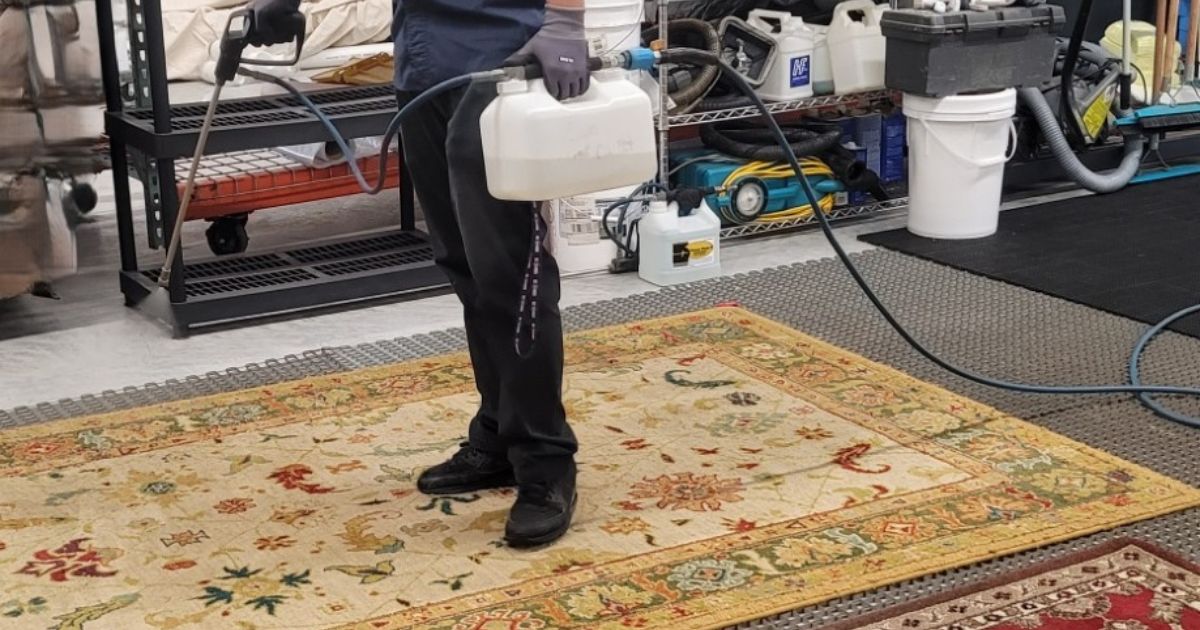
Moth damage to area rugs is one of the most expensive surprises a homeowner can face, and it almost always happens quietly. Moth larvae feed on keratin in natural fibers like wool and silk, causing significant damage that often goes completely unseen until it’s severe. By the time you notice a bald patch or a thinning section, larvae may have been feeding for weeks. This guide walks you through how to spot the problem early, what to do about it, and how to protect your rugs for good.
Table of Contents
- Spotting moth damage: What every rug owner should know
- How moth damage happens and why fast action matters
- Deep cleaning and treatment: What works (and what doesn’t)
- Rug restoration options: Repair after moth damage
- Preventing future moth damage: Proven strategies
- Get expert rug protection and cleaning help
- Frequently asked questions
Key Takeaways
| Point | Details |
|---|---|
| Early detection saves rugs | Spotting moth signs quickly can prevent expensive restoration or replacement. |
| Pro cleaning is best for valuables | Antique or high-value rugs need expert care to avoid permanent fiber and dye damage. |
| Prevention beats repair | Regular cleaning, sunlight, and humidity control are your best defenses against moths. |
| Some DIY is effective | Vacuuming and freezing are useful for mild cases but have limits with deep or old infestations. |
Spotting moth damage: What every rug owner should know
Most homeowners picture moths as the winged insects fluttering around a light. The real culprits are their larvae, tiny cream-colored grubs that hide in your rug and eat steadily. Knowing what to look for is your first line of defense.
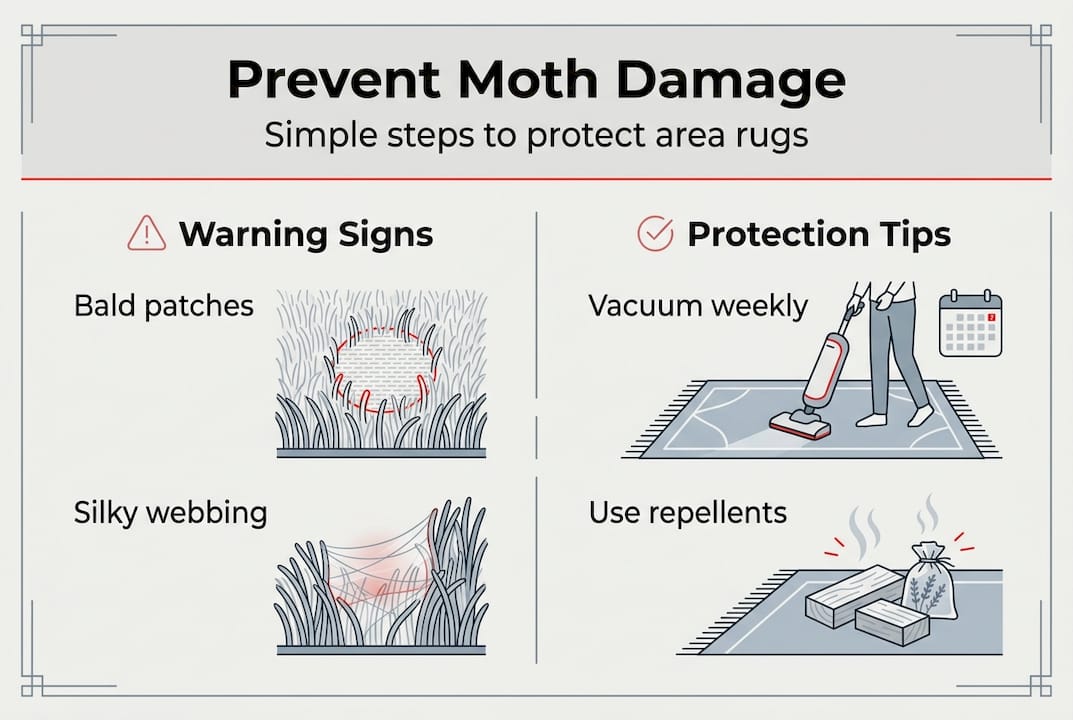
Common signs of moth activity in area rugs:
- Bald or thinning patches, often irregular in shape
- Small holes that seem to appear from nowhere
- Silky, fine webbing on the rug surface or underneath
- Gritty, sand-like specks called frass (larval waste)
- Loose wool tufts or fibers that pull away easily
- A musty smell coming from the rug
Moth larvae feed on keratin in wool and silk, leaving bald patches, holes, silky webbing, and gritty frass as they work through the pile. The damage is rarely uniform. It tends to cluster in spots that stay dark and undisturbed.
That brings up the hidden risk most people miss. Larvae prefer soiled fibers and dark, undisturbed areas under furniture. The edge of your rug tucked under a sofa is prime real estate for a moth infestation. You may not see the damage until you move the furniture.
Did you know? Clothes moths (the ones that target rugs) have plain, buff-colored wings and avoid light. They are completely different from pantry moths. Understanding the difference between clothes moths and pantry moths helps you identify the actual threat in your home.
Which rugs are most at risk?
- Wool rugs, especially antiques and hand-knotted pieces
- Silk rugs or blends with natural protein fibers
- Rugs that have been stored in low-light, low-traffic areas
- Rugs with food, pet dander, or body oil residue in the fibers
- Synthetic rugs are rarely affected unless heavily soiled
New England homes face specific challenges. High humidity in summer and long periods of indoor storage during winter create ideal conditions for moth activity. The importance of professional cleaning becomes especially clear when you consider how much moisture and organic debris can build up in a rug over a single season.
Pro Tip: Flip your rug over and inspect the backing at least twice a year. Larvae often start feeding from the underside where the pile meets the foundation, so damage there is a very early warning sign.
How moth damage happens and why fast action matters
Once you can spot harm, it’s just as important to understand how fast things can escalate and what that means for your wallet.
The moth life cycle moves quickly. Adult moths lay eggs directly in rug fibers. Those eggs hatch into larvae that feed continuously for several weeks before pupating. During that feeding phase, they chew through pile fibers and, in severe cases, the foundation threads that hold the rug together. Once foundation threads are gone, the rug cannot be restored.
Damage accelerates when rugs sit undisturbed. No vacuuming, no light, no movement means larvae can complete multiple feeding cycles without interruption. A rug stored in a basement or left under heavy furniture for a single winter can go from minor thinning to significant structural loss.
| Stage of damage | Typical repair option | Estimated cost range |
|---|---|---|
| Early (surface pile only) | Professional cleaning + treatment | $150 to $400 |
| Moderate (patchy pile loss) | Repiling or reweaving | $300 to $800+ |
| Severe (foundation affected) | Partial restoration or replacement | $800 to $2,500+ |
| Total loss (foundation gone) | Replacement only | Full rug value |
Early action prevents costly total loss; extermination averages $200 to $370, but repair costs climb sharply with severity. Catching the problem at stage one versus stage three is the difference between a cleaning bill and a restoration project.
For antique or high-value rugs, when expert help is needed is essentially the moment you suspect any activity at all. These rugs are too valuable and too fragile for a wait-and-see approach.
A note on timing: Moths are most active in spring and early summer, but New England’s heated indoor environments mean larvae can stay active year-round. Don’t assume winter storage makes your rugs safe.
Deep cleaning and treatment: What works (and what doesn’t)
If you’ve seen signs of damage or just want to clean preventively, here’s a breakdown of what actually works, what doesn’t, and how to take action today.
Step-by-step approach for active or suspected infestations:
- Isolate the rug. Roll it up and seal it in a plastic bag to prevent larvae from spreading to other textiles.
- Vacuum both sides thoroughly. Use a strong suction setting and go over every inch, including the edges and fringe.
- Inspect in bright light. Take the rug outside on a sunny day and check the pile and backing carefully.
- Apply heat or cold if safe. Heat above 120°F for 30 minutes or freezing at 0°F for 72 hours can eradicate all life stages. Check fiber and dye stability before using heat.
- Contact a professional. For anything beyond a very mild surface case, professional treatment is the reliable option.
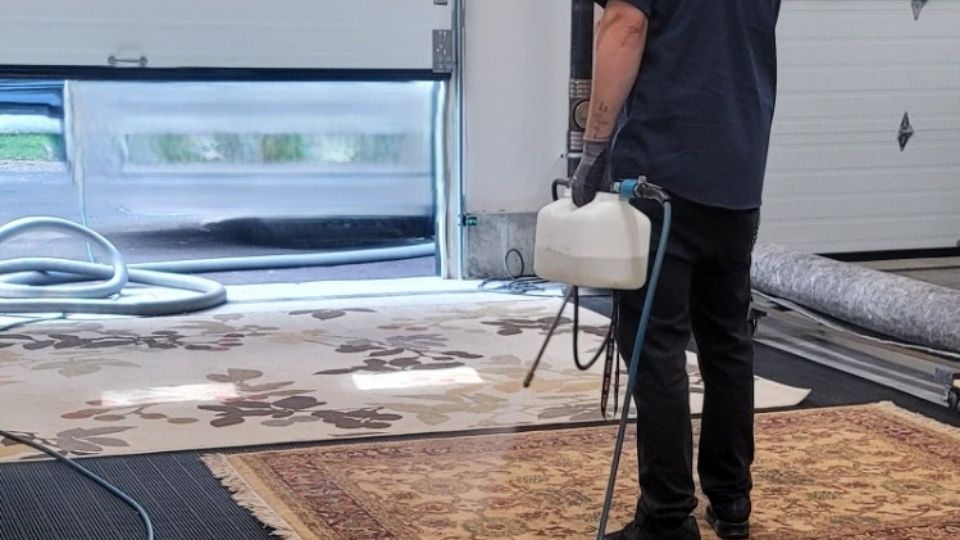
Only deep vacuuming, professional immersion, and controlled drying reliably remove larvae, eggs, and the food sources that attract moths in the first place. Surface cleaning alone won’t solve an active infestation.
| Method | Effectiveness | Cost | Risk |
|---|---|---|---|
| DIY vacuuming | Mild cases only | Low | Misses eggs in pile base |
| Steam cleaning | Moderate | Low to medium | Can damage wool/dyes |
| Freezing | High (all life stages) | Low | Requires 72+ hours at 0°F |
| Professional immersion wash | Very high | $150 to $400+ | Minimal with trained pros |
| Permethrin spray | High | Medium | Toxic to cats, use with care |
| Cedar/lavender | Deterrent only | Low | Does not kill active larvae |
DIY vacuuming and steam are adequate for mild cases, but professional services are strongly recommended for valuables and deep infestations. Natural deterrents like cedar and lavender smell great and can discourage new moths from settling, but expert opinions on natural deterrents confirm they will not eliminate an active infestation.
Pro Tip: After any moth treatment, follow up with a review of your carpet maintenance steps to remove residual eggs and prevent re-infestation. A single missed egg cluster can restart the cycle.
Rug restoration options: Repair after moth damage
Even with the best cleaning, sometimes you’re facing repairs. Here are the ways professionals can bring damaged rugs back to life, and how to know when that’s not realistic.
The good news is that skilled restorers can do remarkable work. The key is acting before foundation threads are compromised.
Professional restoration methods:
- Reweaving: Best for hand-knotted rugs. A skilled craftsperson re-knots individual threads to match the original pattern, color, and knot density. Time-intensive and precise.
- Repiling: Used for machine-made rugs. New pile fibers are inserted to fill bald areas. Less labor-intensive than reweaving but still requires color matching.
- Patching: For severe localized damage. A section of matching material is grafted in. Works best when a donor piece of the same rug or a very close match is available.
Restoration options include reweaving for hand-knotted rugs, repiling for machine-made, and patching for severe damage, with careful matching of wool, color, and knot density to preserve the rug’s integrity and value.
When is restoration not worth it? If foundation warps and wefts (the structural threads running through the rug) are gone across a large area, the rug has no base to restore. At that point, replacement is the honest recommendation. A reputable restorer will tell you this upfront rather than take your money for a poor result.
For antique rugs, restoration almost always makes financial sense because replacement value is high. For a modern machine-made rug worth $200, a $600 restoration isn’t practical. Knowing the value of your rug before you invest in restoration for valuable rugs helps you make a smart decision.
Pro Tip: Take photos of your rug’s pattern and colors before any restoration work begins. This gives the restorer a reference and gives you documentation for insurance purposes.
For professional cleaning options that include damage assessment, working with a local specialist means you get an honest evaluation and a clear cost estimate before any work starts.
Preventing future moth damage: Proven strategies
Now that you’ve handled or prevented active infestations, let’s make sure your rugs are protected for years to come. Here’s a prevention plan that works for New England homes.
A practical prevention routine:
- Vacuum weekly, paying special attention to edges, fringe, and areas under furniture where larvae prefer to hide.
- Rotate your rugs every six months to expose previously dark areas to light and foot traffic.
- Expose rugs to sunlight periodically. Larvae avoid light and heat, so even a few hours outside on a dry day disrupts their activity.
- Keep humidity low. Use a dehumidifier in summer months, especially in basements and rooms with limited airflow.
- Use natural repellents like cedar blocks or lavender sachets near stored rugs. Replace them every few months as the scent fades.
- Schedule annual professional cleaning to remove embedded eggs, larvae, and the organic debris that attracts moths.
- Consider magnesium silicofluoride treatment for long-term protection. This treatment can provide one to three years of moth resistance for wool rugs.
Weekly vacuuming, annual professional cleaning, airflow, sunlight, rug rotation, natural repellents, and magnesium silicofluoride offer layered, long-term protection for wool rugs.
New England’s humidity and seasonal risk factors make consistent prevention especially important. A rug that survives a New England summer without professional care has likely accumulated enough moisture and organic material to become a target.
The smartest investment you can make is to schedule annual rug cleaning before problems start. A professional cleaning removes what vacuuming misses and gives you a trained set of eyes on your rug’s condition every year.
Get expert rug protection and cleaning help
If you want expert help or peace of mind that your rugs are fully protected, here’s where to find local support.
At Nu-England Services, we’ve been caring for New England homes since 1968. Our professional rug and carpet cleaning team has the training and equipment to handle everything from routine maintenance to active moth infestations and post-damage restoration.
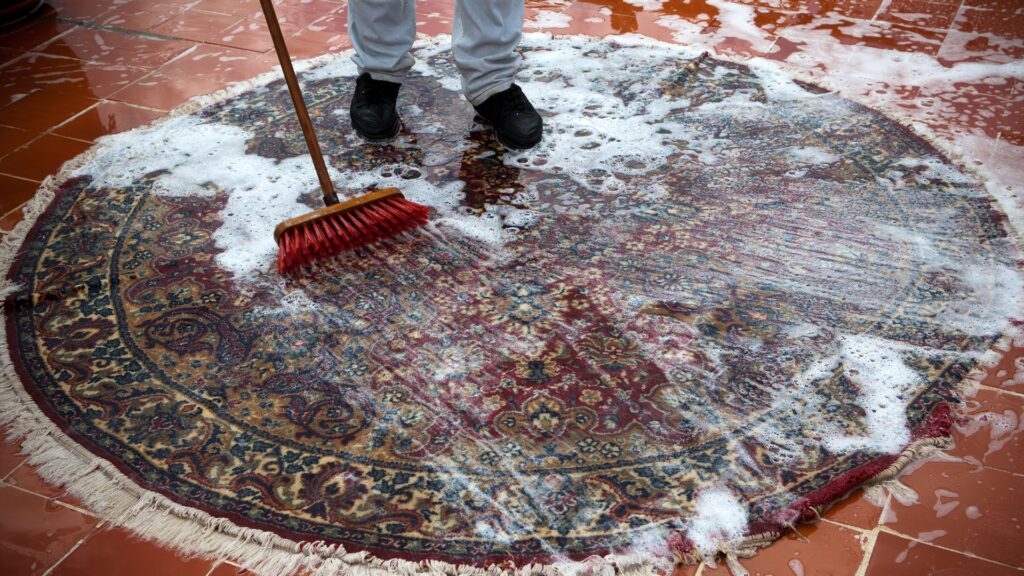
We offer specialized area rug protection that includes moth damage assessment, deep immersion cleaning, and restoration referrals for antique and high-value pieces. Whether you’ve spotted warning signs or just want to stay ahead of the problem, our team gives you an honest evaluation and a clear plan. Request a free quote today and protect the rugs that matter most to your home.
Frequently asked questions
What are the first warning signs of moth damage to area rugs?
Look for bald patches, irregular thinning, powdery frass, loose wool tufts, or silky webbing on the rug surface and under edges. Bald patches, frass, and webbing are the classic early signs that larvae are actively feeding.
Is DIY moth treatment safe for antique or valuable rugs?
DIY methods risk worsening fiber or dye damage, especially on older rugs with fragile construction. DIY is not advised for antiques; professional services use safer, more effective methods that protect the rug’s value.
How much does it cost to treat and repair moth damage?
Extermination averages $200 to $370, and restoration costs vary widely based on rug type, size, and the severity of damage. Catching the problem early keeps costs at the lower end.
How can I prevent moths from coming back after treatment?
Vacuum weekly, schedule annual professional cleanings, use cedar or lavender repellents, and monitor with pheromone traps. Weekly vacuuming, annual cleaning, and natural repellents form the core of an effective long-term prevention routine.
Are mothballs or sprays recommended for area rugs?
Mothballs are toxic to people and pets and are often ineffective against rug-dwelling larvae. Mothballs and most DIY sprays are not safe or effective for area rugs, and many sprays cause permanent dye damage.
