
TL;DR:
- Professional tile and grout cleaning uses commercial-grade equipment and a five-step process to remove embedded dirt and stains. Regular cleaning every 12 to 18 months helps prevent deep contamination and extends tile lifespan, especially in high-traffic or moisture-prone areas. Proper method selection based on tile material ensures effective cleaning without surface damage.
Table of Contents
Professional tile and grout cleaning is a specialized service that removes embedded dirt, bacteria, and staining from tile surfaces using commercial-grade equipment and multi-step processes that consumer tools cannot replicate. Whether you own a home with a tiled kitchen and bathrooms or manage a commercial property with high-traffic flooring, the condition of your grout directly affects both hygiene and appearance. Grout is porous by nature, which means it traps oils, mold spores, and grime below the surface. Regular mopping moves dirt around but never pulls it out. This guide covers everything you need to know about professional tile and grout cleaning for homes and businesses, from the cleaning process itself to pricing, frequency, and the best methods for lasting results.
What does professional tile and grout cleaning involve?
Professional tile and grout cleaning follows a standardized 5-step process: inspection, pre-treatment, agitation, high-pressure hot water extraction, and a final rinse. Each step serves a specific purpose, and skipping any one of them produces noticeably weaker results.
- Inspection. A technician examines the tile and grout for cracks, staining patterns, and surface material. Natural stone requires different chemistry than porcelain or ceramic, and identifying the material upfront prevents damage.
- Pre-treatment. A professional-grade cleaning solution is applied to the surface and allowed to dwell. This emulsifies grease, breaks down soap scum, and loosens mineral deposits before any physical agitation begins.
- Agitation. A rotary brush or hand tool works the solution into grout lines, dislodging particles that have bonded to the porous surface over months or years.
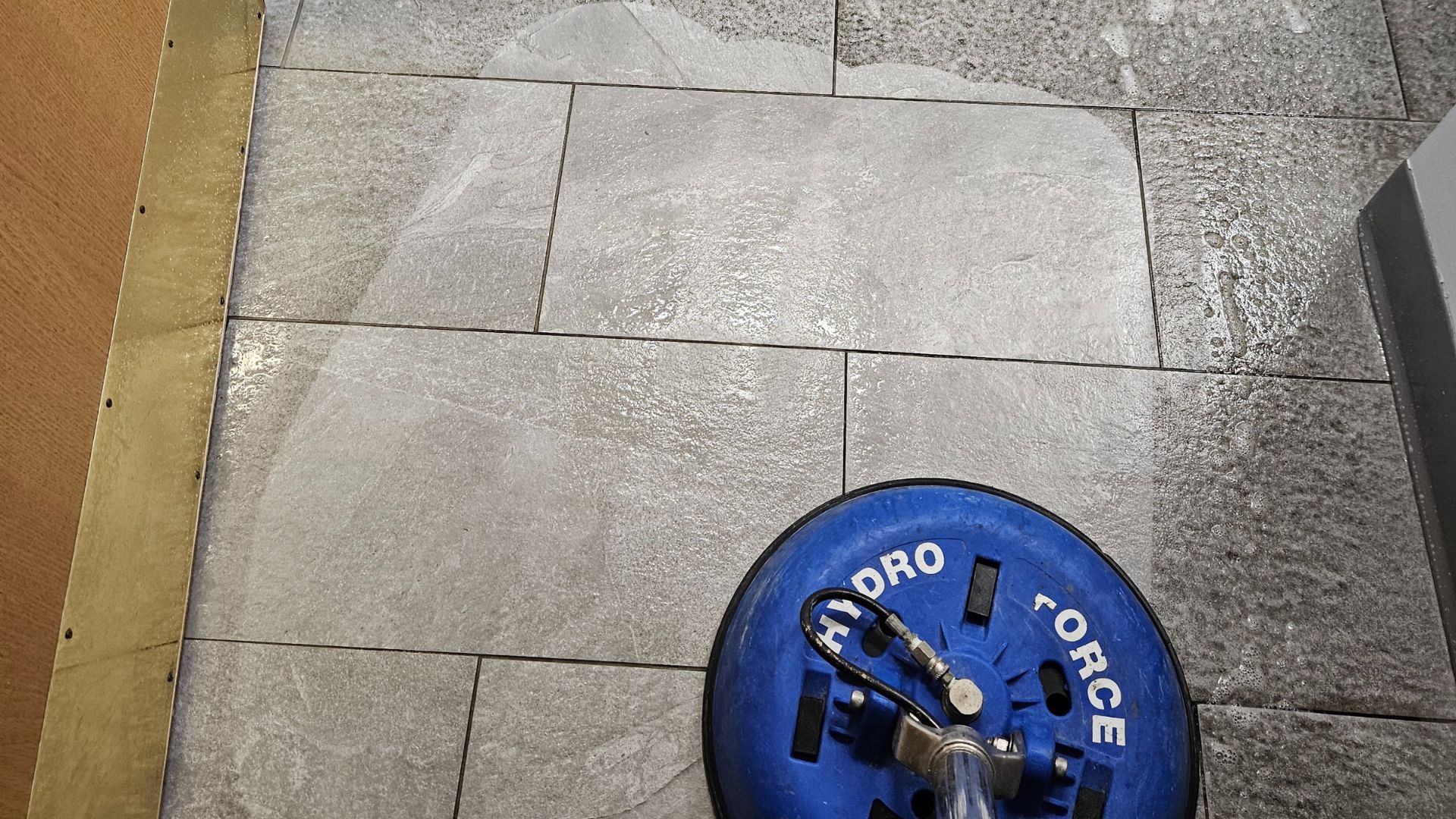
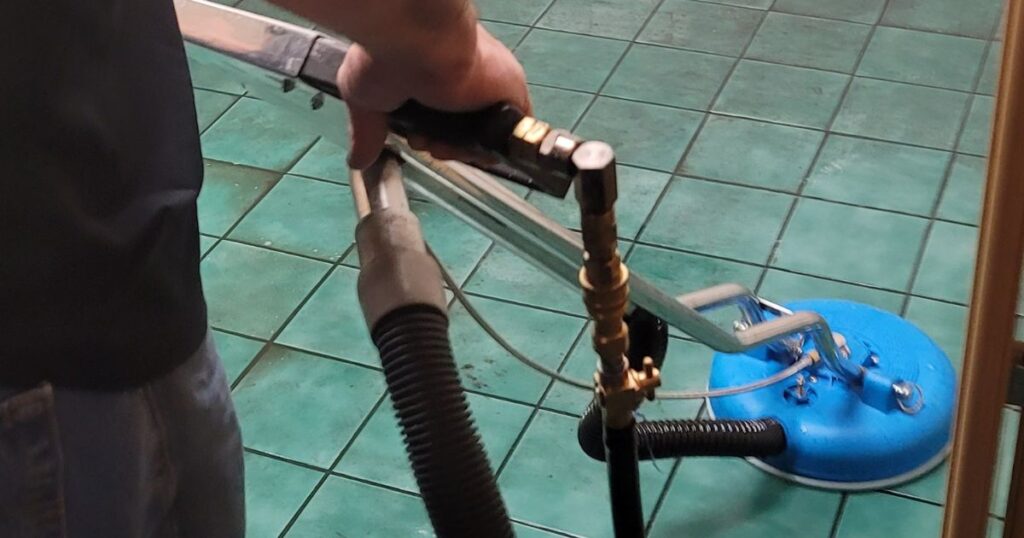
- High-pressure hot water extraction. Commercial-grade extraction machines operate at higher temperatures and pressures than any consumer or rental model. This step physically flushes embedded grime out of the grout rather than just washing over it.
Pro Tip: Ask your technician whether they use truck-mounted or portable extraction units. Truck-mounted systems deliver more consistent heat and pressure, which translates directly to cleaner grout lines.
The difference between this process and a DIY scrub-and-mop routine is not just effort. It is physics. A consumer mop head never reaches the interior of a grout line. A commercial extraction unit does.
How is pricing determined for professional tile and grout cleaning?
Pricing for professional tile and grout cleaning depends on several overlapping factors, not just square footage. Understanding these factors helps you budget accurately and avoid surprises on the invoice.
- Minimum service fee. Most professional services charge a minimum fee around $200 per visit to cover equipment setup and labor. This applies even for small jobs like a single bathroom.
- Surface area. Cost scales with the total square footage of tile being cleaned. Larger kitchens, open-plan commercial floors, and multi-room jobs push the total higher.
- Tile material. Pricing varies based on tile material, with natural stone such as travertine or marble requiring gentler, more time-intensive methods than standard porcelain or ceramic.
Commercial properties typically pay more per visit than residential clients because of larger surface areas, more complex layouts, and the need for after-hours scheduling. However, commercial clients often negotiate volume pricing for recurring service contracts, which lowers the per-visit cost over time.
DIY cleaning appears cheaper upfront, but the math changes when you factor in repeated product purchases, equipment rental fees, and the cost of regrouting surfaces that were damaged by harsh chemicals or aggressive scrubbing. Professional service done correctly extends the life of your tile installation.
How often should you schedule professional tile and grout cleaning?
Professional deep cleaning is recommended every 12–18 months for residential properties under normal use. That interval assumes a household without heavy foot traffic, pets, or young children. Many homes need service more frequently.
The right schedule depends on your specific conditions:
- High-traffic areas. Entryways, kitchens, and commercial lobbies accumulate grime faster than low-traffic rooms. These areas may need professional attention every 6–12 months.
- Pets and children. Both introduce more moisture, oils, and organic material into grout lines. Cleaning frequency depends on foot traffic, children, and pets, and homes with both often need annual or more frequent service.
- Moisture-heavy spaces. Bathrooms and laundry rooms are prone to mold and mildew growth in grout. Moisture management is the primary factor for grout health, and poor ventilation accelerates deterioration between professional cleanings.
- Commercial kitchens and food service. Grease and food residue penetrate grout rapidly. Quarterly professional cleaning is standard practice in these environments.
Between professional visits, you can extend the life of your clean grout with a few consistent habits. Wipe up spills immediately. Use a squeegee on shower walls after each use. Run exhaust fans during and after showers to reduce humidity.
Pro Tip: Keep a simple log of your last professional cleaning date and note any areas that show early discoloration. Sharing this with your technician at the next visit helps them target problem zones faster.
For commercial property owners, pairing your tile cleaning schedule with your janitorial cleaning services contract simplifies scheduling and keeps maintenance costs predictable.
What are the best methods for tile and grout cleaning and restoration?
The best grout cleaning methods match the technique to the tile material and the severity of the problem. Using the wrong approach causes more damage than the original dirt.
Steam extraction and hot water pressure
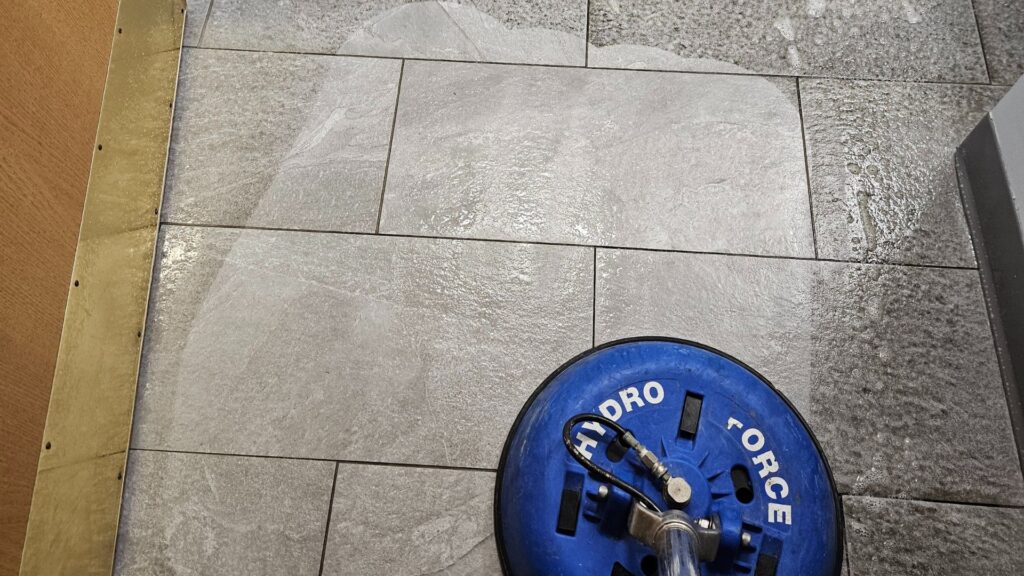
Steam extraction is the gold standard for most tile types. It kills bacteria and mold spores without chemical residue and loosens embedded grime effectively. Commercial extraction systems physically flush grime from grout in a way that surface scrubbing cannot achieve. For heavily soiled commercial floors, technicians often combine steam extraction with a pre-treatment dwell time of 10–15 minutes for maximum penetration.
Eco-friendly cleaning options
Many professional services now offer plant-based or low-VOC cleaning solutions that are safe for households with children, pets, or chemical sensitivities. These products perform well on light to moderate soiling. For severe buildup, a stronger pre-treatment may still be necessary, but the extraction step removes chemical residue regardless of the product used.
What to avoid
Aggressive scrubbing with household tools can damage grout. Wire brushes and abrasive pads erode grout over time, widening lines and creating more surface area for dirt to penetrate. Grout pens provide short-term whitening but peel and do not address the underlying contamination. They are a cosmetic fix, not a restoration method.
Pro Tip: If you are unsure whether your tile is natural stone or ceramic, scratch a hidden corner with a metal key. Natural stone will show a scratch; ceramic will not. This simple test helps your technician choose the right cleaning chemistry.
For a deeper look at tile and grout best practices, Nu-England Service, Co.’s resource guide covers maintenance routines between professional visits. You can also review home cleaning service options that complement a regular tile care program.
Key Takeaways
Professional tile and grout cleaning requires commercial-grade equipment, matched cleaning chemistry, and a five-step process that consumer tools cannot replicate, making professional service the most reliable path to restored, long-lasting tile surfaces.
| Point | Details |
| Five-step professional process | Inspection, pre-treatment, agitation, extraction produce results DIY methods cannot match. |
| Minimum service fee applies | Most professional visits start around $150, with final cost driven by area, tile type, and treatments needed. |
| Residential cleaning interval | Schedule professional service every 12–18 months, or more often with pets, children, or high traffic. |
| Match method to material | Natural stone, porcelain, and ceramic each require different cleaning chemistry to avoid surface damage. |
Why I think most property owners underestimate grout
After years of working in property cleaning and restoration across New England, the pattern I see most often is this: owners wait too long. They assume grout discoloration is cosmetic. It is not. Grout that has absorbed years of grease, soap scum, and moisture becomes a breeding ground for mold, and by the time the surface looks visibly dark, the contamination runs deep.
The other misconception I encounter regularly is that professional cleaning is only worth it when things look bad. The real value is preventive. A property that receives consistent professional care every 12–18 months never reaches the point where restoration is necessary. Restoration costs more than maintenance, every time.
Choosing a trustworthy service provider comes down to three things: they ask about your tile material before quoting, they explain the process step by step. If a technician quotes you a price without asking what type of tile you have, that is a red flag. Matching cleaning techniques to tile material is not optional. It is the difference between a restored floor and a damaged one.
The property owners I have seen get the most value from professional tile care are the ones who treat it like any other maintenance line item, not a one-time fix. Schedule it, log it, and pair it with good daily habits. Your floors will outlast your expectations.
Nu-England Service, Co.’s professional tile and grout services for New England properties
Nu-England Service, Co. has served residential and commercial clients across New England since 1968, and tile and grout cleaning is one of the core services the company delivers with both professional equipment and material-specific expertise.

Whether you need a single bathroom restored or a full commercial floor program, Nu-England Service, Co.’s team assesses your tile type, and traffic patterns before recommending a treatment plan. The company’s special cleaning services in Massachusetts cover deep tile and grout cleaning, and ongoing maintenance programs for both homes and businesses. Nu-England Service, Co. also offers professional stain removal that protects your property’s value over the long term. Request a free quote directly through the Nu-England Service, Co. website to get a site-specific assessment and transparent pricing.
FAQ
What is professional tile and grout cleaning?
Professional tile and grout cleaning is a multi-step service using commercial-grade equipment to remove embedded dirt, bacteria, and staining from tile surfaces. The process includes pre-treatment, mechanical agitation, high-pressure hot water extraction.
How often should I have my tile and grout professionally cleaned?
Residential properties benefit from professional cleaning every 12–18 months under normal use. High-traffic areas, homes with pets or children, and commercial spaces require more frequent service, sometimes every 6–12 months.
Is professional tile cleaning worth the cost?
Professional cleaning extends the life of your tile installation and prevents the need for costly regrouting or replacement. The minimum service fee starts around $150, which is far less than the cost of tile restoration or replacement caused by neglected grout.
Can professional cleaning remove permanent grout stains?
Standard cleaning removes most staining.
What is the difference between residential and commercial tile cleaning?
Residential tile cleaning typically covers smaller areas with moderate soiling, while commercial grout services address larger surfaces, heavier contamination, and scheduling constraints like after-hours access. Commercial clients often benefit from recurring service contracts with volume pricing.
