
Table of Contents
Most pet owners have scrubbed a carpet stain, declared victory, and then smelled it again three weeks later. That cycle happens because pet urine is not a surface problem. It is a chemistry problem, and most DIY approaches never reach the actual source.
The real culprit is uric acid. When urine dries, uric acid forms microscopic crystals that bond tightly to carpet fibres, backing, and padding. These crystals are not water-soluble, meaning rinsing, scrubbing, and even enzyme sprays applied at the surface level leave them mostly intact. Common household remedies, such as baking soda, vinegar, and hydrogen peroxide, address only the water-soluble parts of urine but leave the crystals untouched. The odor fades temporarily, then returns the moment humidity rises.
Here is where most DIY pet stain solutions fail:
- They clean only the visible surface, not the padding or subfloor beneath
- Baking soda and vinegar mask odors without breaking down uric acid crystals
- Consumer enzyme sprays rarely penetrate deep enough to reach contamination in the padding
- Insufficient extraction leaves moisture behind, feeding bacterial regrowth
- Heat from steam cleaners can permanently bond urine proteins into carpet fibers
Enzymatic cleaners are the right chemistry for this job, but they are also the most misused tool in the DIY toolkit. Applied incorrectly, without adequate dwell time or depth, they produce the same disappointing result as everything else.
PRO TIP: Calling a professional first instead of trying to treat it yourself, can help prevent secondary damage of pushing the urine deeper into the pad and subfloor. We don’t usually suggest any pretreatment by customers as it usually makes things worse. Just blot with a towel and leave a towel with something heavy on top of it to draw out as much moisture as possible.
Why pet urine is so hard to remove from carpet
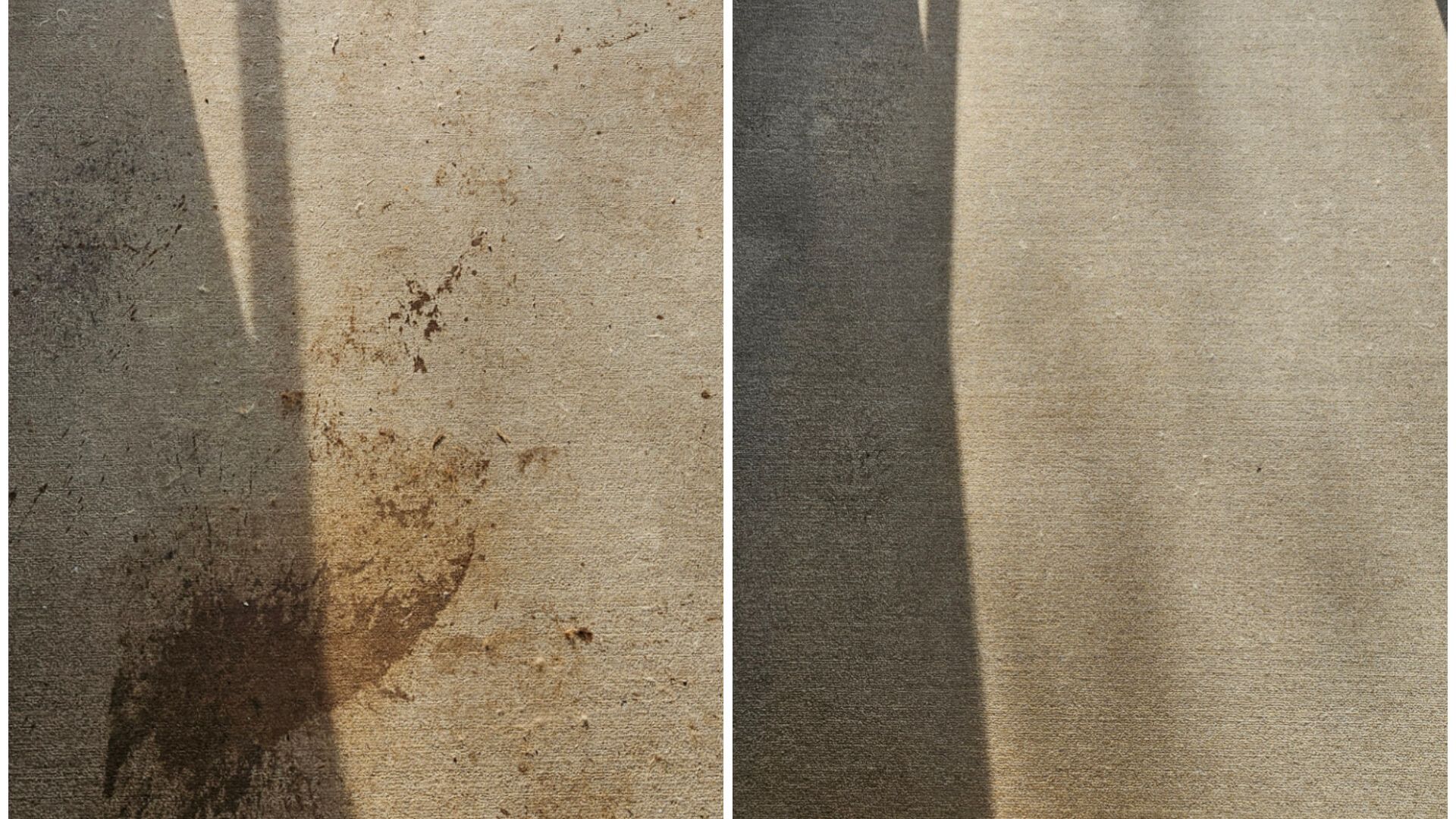
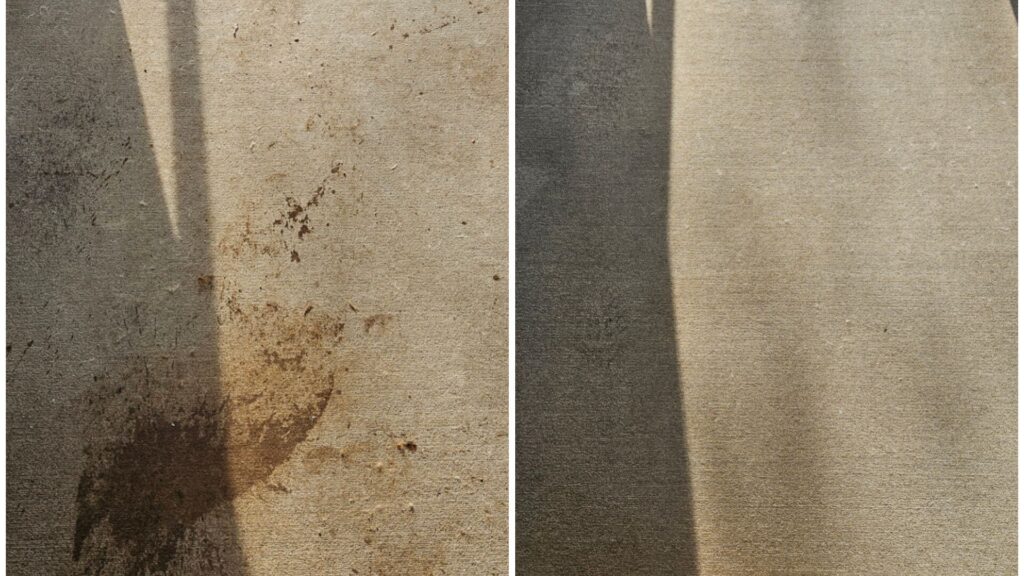
Pet urine contamination is a three-layer problem. The liquid soaks through the carpet pile, through the backing, into the foam padding, and in repeated or severe cases, into the subfloor itself. What you see on the surface is typically a fraction of the actual contamination zone. Urine penetrates through all layers, spreading outward as it absorbs into the padding, creating a contamination area significantly larger than the visible stain above.
The chemistry compounds the problem. Fresh urine is mostly water, urea, and dissolved organics. Within hours, bacteria colonize the warm, moist environment and convert urea into ammonia, producing that sharp, characteristic smell. As the water evaporates, uric acid crystallizes onto carpet fibers and backing. Those crystals are hydrophobic, meaning water-based cleaning solutions slide right past them.
Humidity is what brings the odor back. When moisture in the air rises above a certain threshold, dormant uric acid crystals reactivate and release ammonia and volatile mercaptans all over again. This cycle can repeat for years in untreated carpet. Some professionals report finding active uric acid deposits in carpet padding that were never treated after the original accident.
Pro Tip: Shine a 365-nanometer UV blacklight over your carpet in a darkened room. Uric acid and biological proteins fluoresce yellow-green under UV, revealing contamination zones that look completely clean in normal light. A moisture meter used on suspect areas will confirm whether the padding beneath is still wet.
What common DIY methods actually do (and don’t do)
Understanding why each popular approach falls short helps you stop wasting time on treatments that only delay the problem.
Baking soda absorbs volatile compounds from the air above the carpet, which temporarily reduces the smell. Once you vacuum it away, the uric acid crystals remain intact and the odor returns. It is an air freshener, not a stain treatment.
White vinegar can neutralize some of the alkaline ammonia in aged urine, which is why it seems to work at first. But vinegar is not capable of breaking down uric acid crystals. Worse, it introduces additional moisture that can reactivate dormant crystals and temporarily intensify the smell. It also creates a serious problem for the next step: vinegar’s acidity deactivates enzymatic cleaners, rendering them ineffective if applied afterward.
Hydrogen peroxide is an oxidizer that can bleach urine stains from synthetic fibers. It does not eliminate uric acid, and at even the 3% concentration sold in drugstores, it carries a real risk of permanent color damage to wool, nylon with acid-based dyes, and darker synthetics.
Consumer enzymatic sprays are the right idea with the wrong execution. They require 12–72 hours of dwell time to activate, depend on sustained moisture, and cannot penetrate deeply enough to reach contamination in the padding. Most pet owners apply them, let them sit for twenty minutes, and blot them up. That is not enough time or depth for the enzymes to complete their work.
- Baking soda: Absorbs surface odor temporarily; leaves uric acid crystals untouched
- Vinegar: Neutralizes ammonia briefly; deactivates enzymatic cleaners; adds moisture that reactivates crystals
- Hydrogen peroxide: Oxidizes surface stains; risks carpet discoloration; does not break down uric acid
- Consumer enzyme sprays: Correct chemistry, wrong depth and dwell time; cannot reach padding
- Rental carpet machines: Limited suction and heat; remove only a fraction of moisture, leaving padding damp and bacterial growth conditions intact
For a broader look at why DIY carpet maintenance often misses the mark, this practical carpet care guide covers the limitations in detail.
How professional pet stain and odor treatments actually work
Professional treatment is not a stronger version of what you do at home. It is a categorically different process that addresses every contamination layer with the right chemistry in the right sequence.
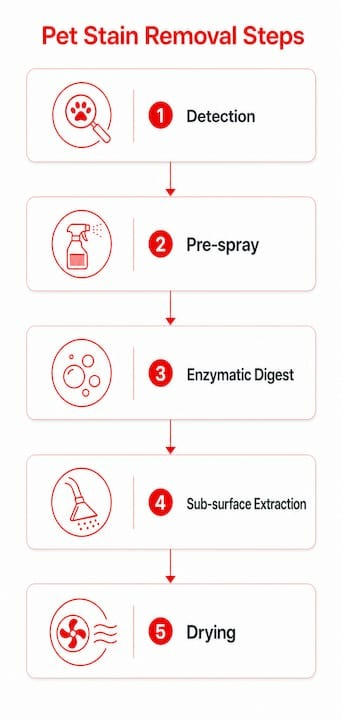
The process starts with diagnostics. A UV blacklight maps the full contamination zone, which is often significantly larger than the visible stain. A moisture meter confirms whether the padding is wet and whether the subfloor has been affected. Skipping this step means treating the wrong area.
From there, the chemistry follows a precise sequence. An alkaline pre-spray with surfactant action lifts surface urine and begins breaking down organic residue. Enzymatic treatment targets uric acid and protein compounds at the molecular level, converting them into carbon dioxide, water, and simple inorganic molecules. An oxidative step neutralizes bacterial byproducts that enzymes alone cannot address. An acid rinse follows to neutralize residual alkalinity and return the fiber to a clean, near-neutral state.
The mechanical side is equally important. A sub-surface extraction tool injects enzyme solution at high volume directly into the padding through the carpet face, then extracts the dissolved contamination. This is the step that makes professional treatment durable. Without it, uric acid crystals in the padding remain, and the odor returns. Post-treatment, air movers accelerate drying to prevent any residual moisture from reactivating remaining compounds.
The full chemistry stack required for set-in pet urine — including alkaline pre-spray, enzymatic digestion, oxidative neutralization, and acid rinse — must be executed in sequence. Skipping any one step often leads to odor returning within weeks.
Why pet odors come back after you clean
The short answer: you cleaned the carpet, but not the padding. Uric acid crystals in the backing and foam padding were never reached, and they are still there, waiting for moisture.
Pets return to the same spots because they can smell the uric acid markers that humans cannot detect after a surface clean. The chemical signal that tells your dog or cat “this is a bathroom” is still present in the padding, even when the carpet looks and smells fine to you. Each return visit adds fresh contamination on top of the existing crystals, deepening the problem.
Incomplete drying is the third factor. Consumer machines typically leave the padding significantly damp. Within 12–48 hours, bacteria multiply in that moisture and produce stronger, more complex odors. The carpet may smell fine the day after cleaning and noticeably worse a week later, which is not the cleaning wearing off. It is bacterial regrowth in wet padding.
Practical tips for managing and preventing pet stains at home
You cannot replicate professional results at home, but you can significantly reduce damage and avoid the mistakes that make professional treatment harder.
Immediate response matters most. Blot fresh urine with a thick wad of paper towels or a clean white cloth. Press firmly and change the material as it saturates. Do not scrub. Scrubbing drives urine deeper into the fibers and padding, expanding the contamination zone.
- Blot, never scrub; work from the outside of the stain inward
- Skip vinegar and baking soda entirely if you plan to follow with an enzymatic cleaner
- Apply enzymatic cleaner generously, treating an area at least 50% larger than the visible stain
- Cover the treated area with a damp towel and plastic sheeting to prevent the solution from evaporating during dwell time
- Allow at least 24–48 hours of dwell time for older or heavier deposits
- After rinsing, dry the area thoroughly; a fan or dehumidifier speeds the process and prevents bacterial regrowth
- Use a UV blacklight periodically to find hidden deposits before they become deeply set
For prevention, pet training and consistent bathroom routines reduce accidents significantly. Waterproof area rugs or washable mats in high-traffic zones protect carpet from direct contact. Keeping indoor humidity below 50% with a dehumidifier reduces the frequency of uric acid reactivation between professional cleanings.
Pro Tip: After applying an enzymatic cleaner, cover the area with a damp cloth and then a sheet of plastic wrap. This traps moisture and keeps the enzymes active far longer than leaving the area open to air. The difference between a 20-minute open application and a 24-hour covered one is the difference between partial and complete breakdown of uric acid crystals.
The chemistry behind pet odors and why specialized treatment is needed
Pet urine odor is not a smell problem. It is a chemistry problem with a specific molecular cause, and understanding it explains why no amount of scrubbing or deodorizing produces a lasting result.
Uric acid is the central issue. As urine dries, uric acid crystallizes onto substrate fibers and becomes largely insoluble in water and inert to most conventional cleaning agents. In this crystalline state, it sits dormant until moisture reactivates it, at which point it releases volatile mercaptans and ammonia compounds. Bacteria colonizing the crystalline structure also reactivate, resuming metabolic activity and producing additional odor compounds. The odor is not persisting from the original event. It is being re-released on an ongoing basis.
Enzymatic cleaners work because they address the source at the molecular level. Protease, urease, and lipase enzymes digest the organic compounds in urine, including uric acid precursors, proteins, and lipids, converting them into carbon dioxide, water, and simple inorganic molecules. There is nothing left to reactivate. This is categorically different from deodorizers, which sit on top of the odor source, or surfactant-based cleaners, which dissolve only the water-soluble urine components.
The practical implication is that enzymatic treatment must reach the contamination depth to work. Surface application on a stain that has soaked into the padding treats only the top layer. For older or deeper deposits, an oxidative step is also needed to neutralize bacterial byproducts that enzymes alone cannot fully address. The science behind pet urine odor confirms that durable removal requires enzymatic breakdown combined with oxidative neutralization, not either approach alone.
A published study in Data examined volatile organic compounds emitted from cat urine contaminated carpet over 15 days. Cleaning products were effective at masking odors on day zero, but in most cases could not prevent the return of strong odor compounds by day 15. The compounds responsible included trimethylamine and 3-octanone, described as “fishy” and “mold-like,” neither of which standard cleaning products address at the source.
NES, Co. brings professional-grade pet odor treatment to New England
When the odor keeps coming back despite your best efforts, the contamination has almost certainly reached the padding or subfloor. That is not a DIY problem anymore.

NES, Co., Nu-England Services’ family-owned operation serving New England since 1968, brings the full professional protocol to your home: UV diagnostics to map the real contamination zone, sub-surface extraction to pull dissolved residue from the padding, and the complete chemistry sequence that actually eliminates uric acid rather than masking it. The difference from a surface spray-and-vacuum is not incremental. It is the difference between a carpet that smells clean today and one that stays clean through humid summers and rainy New England winters.
If your carpets have taken repeated pet accidents, or if you have tried every product on the shelf without lasting results, professional carpet cleaning in Massachusetts from NES, Co. is the next step. Request a free quote and get a clear picture of what your carpets actually need.
Key Takeaways
Durable pet odor removal requires enzymatic breakdown of uric acid crystals at every contamination layer, not surface cleaning or odor masking.
| Point | Details |
| Uric acid is the root cause | Crystals bond to carpet fibers and padding, are not water-soluble, and reactivate with humidity to re-release odor. |
| DIY methods address the wrong layer | Baking soda, vinegar, and consumer sprays treat the surface; contamination in the padding and subfloor remains untouched. |
| Heat worsens set stains | Applying steam or hot water before enzymatic breakdown permanently bonds urine proteins into fibers, intensifying odor. |
| Enzymatic cleaners need depth and dwell time | Cover treated areas with a damp cloth and plastic for 24–48 hours; surface application without adequate dwell time yields partial results. |
| NES, Co. provides full-depth treatment | NES, Co. uses UV diagnostics, sub-surface extraction, and a complete chemistry sequence for lasting pet odor elimination in New England. |
