
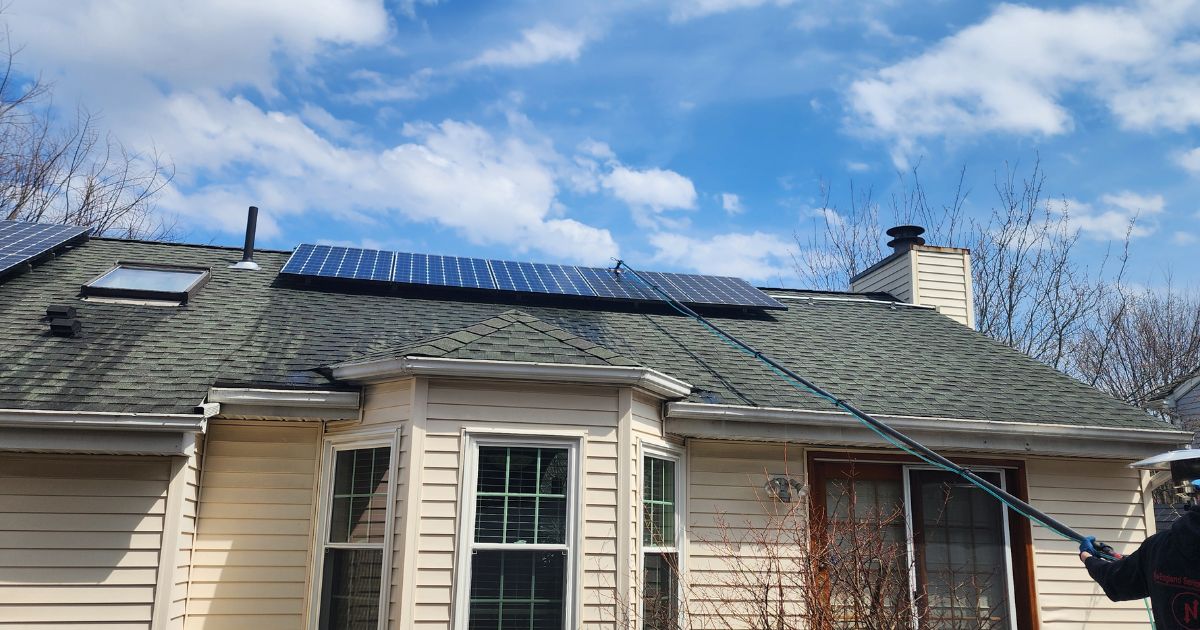
TL;DR:
- Rain alone is insufficient for cleaning solar panels, especially in New England’s salt, pollen, and debris.
- Professional cleaning can recover up to 25% of lost energy and extend system lifespan.
- Regular, seasonal maintenance protects warranties, improves efficiency, and prevents costly repairs.
Most homeowners assume a good rainstorm does the job. It doesn’t. Rain partially cleans but misses pollen, salt residue, and bird droppings that cling stubbornly to panel glass. In New England, where seasons swing hard and coastal air carries salt year-round, that buildup adds up fast. Dirty panels don’t just look bad. They quietly drain your energy output and shorten the life of a system that cost you tens of thousands of dollars. This guide cuts through the confusion, explains exactly what’s happening on your roof, and gives you a clear path to protecting that investment.
Table of Contents
Key Takeaways
| Point | Details |
|---|---|
| Rain isn’t enough | New England weather leaves tough debris like pollen and salt on solar panels that rain can’t remove. |
| Pro cleaning boosts output | Expert cleaning can restore up to 25 percent of lost energy production for solar systems. |
| Scheduled service saves money | Routine professional cleaning extends panel lifespan and pays for itself with improved efficiency. |
| DIY risks warranty | At-home cleaning attempts can damage panels and often void manufacturer warranties. |
Why solar panels need professional cleaning in New England
New England throws a lot at your solar panels. Spring brings heavy pollen from birch, oak, and maple trees. Summer adds dust, insects, and bird activity. Fall drops leaves and debris. Winter leaves behind road salt aerosols and grime that freeze into a thin film on the glass surface. Each season layers on a new problem.
The result? New England’s seasonal factors require more diligent cleaning than the national average. Coastal properties face the added challenge of salt air, which leaves a mineral crust that rain simply can’t dissolve. Panels near highways collect exhaust particulates. Panels under tree canopy deal with sap and pollen in concentrated amounts.
Here’s what most people get wrong: they assume rain handles it. But rain alone is not sufficient for removing pollen, salt, and bird droppings. Rain can actually spread certain residues, smearing them across more of the panel surface instead of washing them away.
Neglected panels lose 10 to 25% of their energy output over time. That’s not a worst-case estimate. That’s a realistic range for panels that go a full year or more without proper attention. Over a 25-year system lifespan, that lost efficiency compounds into serious money.
DIY cleaning sounds tempting but carries real risks:
- Using the wrong brush or abrasive cloth scratches the anti-reflective coating
- Tap water leaves mineral deposits that worsen soiling over time
- Working on a pitched roof without proper equipment is a fall hazard
- Improper technique can void your roof or panel warranty
Professional crews use soft-bristle brushes, deionized water (which leaves zero mineral residue), and are fully insured for rooftop work. Our window and solar panel cleaning teams follow manufacturer guidelines to protect both the panels and your warranty.
Pro Tip: After a heavy pollen week in May or a dusty stretch in August, check your solar monitoring app. A drop of even 5 to 10% in daily output is a reliable signal that your panels need attention.
How professional solar panel cleaning improves performance and savings
Dirt doesn’t block sunlight all at once. It builds up gradually, which is why many homeowners don’t notice the efficiency loss until it’s significant. A light film of pollen might cut output by 5%. Add a summer of bird droppings and dust, and you’re looking at 15 to 20% reduction. Let that go another season, and the number climbs higher.
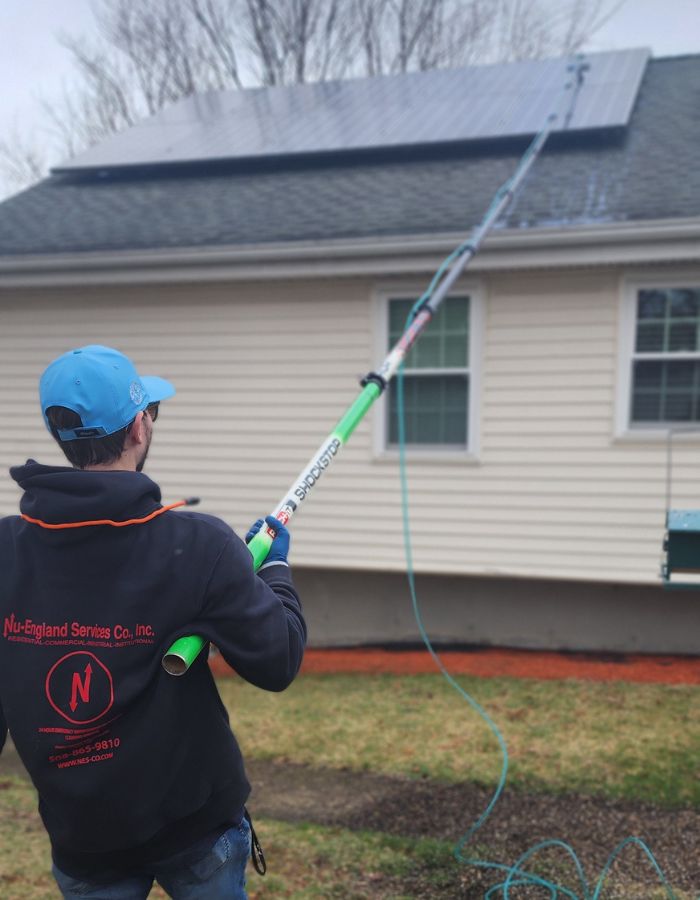
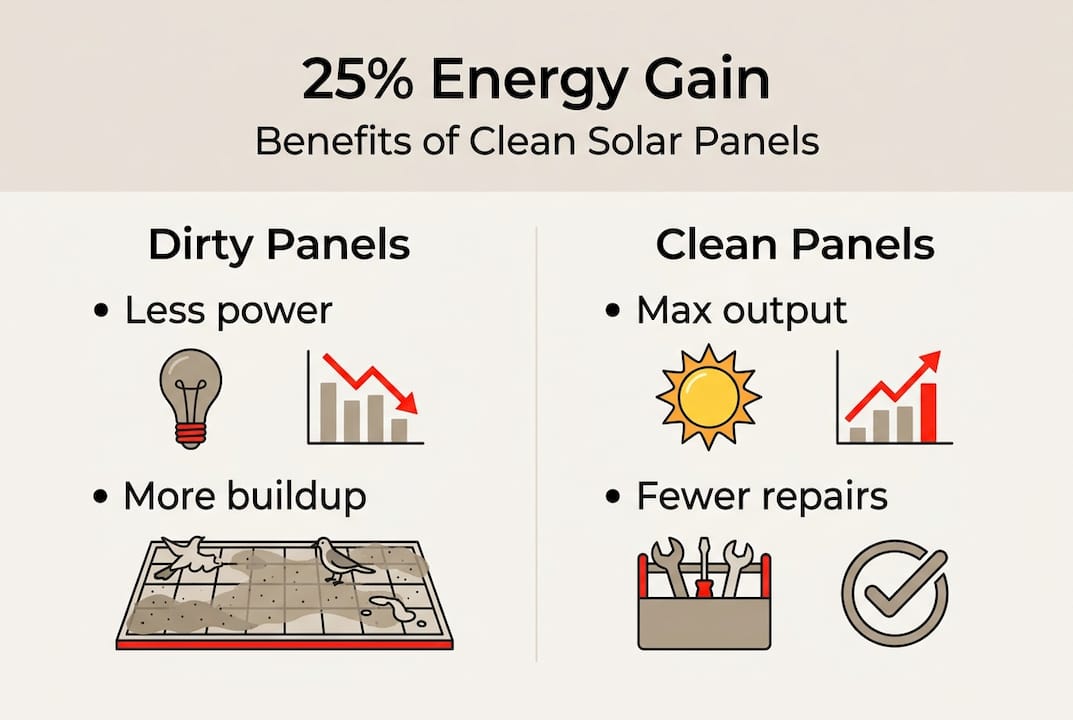
Professionally cleaned panels can recover up to 25% of energy lost from soiling, according to data from our own service records and industry benchmarks. That recovery shows up directly in your utility bill.
Here’s a simple comparison to put the value in perspective:
| Scenario | Annual Energy Output | Estimated Savings Impact |
|---|---|---|
| Clean panels (professional service) | 100% baseline | Maximum ROI |
| Panels with light soiling | 90 to 95% | Moderate loss |
| Panels with heavy soiling | 75 to 90% | Significant loss |
| Panels with no cleaning for 2+ years | Below 75% | Major efficiency drain |
The professional cleaning offsets costs by preventing energy loss and reducing panel degradation over time. A typical residential cleaning costs a fraction of what you lose in energy yield from dirty panels over a year.
Many solar manufacturers and installers require documented maintenance for warranty compliance. A professional service provides that paper trail. If you ever need to make a warranty claim, having a cleaning record strengthens your case considerably.
For more detail on best practices, our solar panel cleaning tips page covers the methods and materials that protect your system.
How often should you schedule professional solar panel cleaning?
For most New England homeowners, cleaning every 6 to 12 months is the right starting point. That range accounts for the region’s seasonal swings without over-servicing panels that may be in lower-soiling environments.
But your property’s specific conditions matter a lot. Soiling impact can spike seasonally, especially during heavy pollen periods, so a one-size schedule doesn’t fit every situation.
Here’s a quick reference for scheduling based on property type:
| Property type | Recommended frequency |
|---|---|
| Standard suburban home | Once per year |
| Near trees or high pollen area | Twice per year |
| Coastal property (salt air exposure) | Twice per year |
| Near highway or industrial area | Twice per year or more |
| Commercial rooftop installation | Quarterly assessment |
To build a schedule that actually works, follow these steps:
- Check your monitoring app monthly. A consistent 5 to 10% dip from your baseline is your signal.
- Schedule one cleaning after peak pollen season, typically late May or early June in New England.
- Schedule a second cleaning in late fall, after leaves have dropped and before winter sets in.
- Set a calendar reminder so it doesn’t fall off your to-do list during busy seasons.
- After any major storm, do a visual check from the ground and look for visible debris or streaking.
For properties with trees overhanging the panels, twice-yearly service is almost always worth it. Sap and pollen from nearby trees create a sticky layer that compounds quickly.
Our guide on cleaning solar panels goes deeper on what to look for between professional visits. And if you’re curious how the same principles apply to other exterior surfaces, our window cleaning tips page covers related best practices.
Pro Tip: Pair your solar panel cleaning with your annual gutter cleaning or exterior home maintenance visit. Bundling services saves time and often reduces the total cost.
Professional vs DIY solar panel cleaning: what you need to know
The DIY instinct is understandable. You’ve got a garden hose, a soft cloth, and a free Saturday. How hard can it be? Harder than it looks, and riskier than most people realize.
The first issue is water quality. Tap water contains minerals that leave deposits on the glass after it evaporates. Those deposits create a new soiling layer almost immediately. Professionals use deionized water, which evaporates clean and leaves nothing behind.
The second issue is tools. Standard sponges and brushes can scratch the anti-reflective coating on solar glass. That coating is what makes the panels efficient. Once scratched, it doesn’t recover, and your output drops permanently.
Here’s a direct comparison:
| Factor | DIY cleaning | Professional cleaning |
|---|---|---|
| Water quality | Tap water (leaves deposits) | Deionized water (zero residue) |
| Tools | Standard household items | Soft-bristle, manufacturer-approved |
| Safety | Roof fall risk | Insured, trained for rooftop work |
| Warranty compliance | Often not documented | Documented for warranty records |
At-home cleaning risks include personal injury and potential equipment and warranty damage. A fall from a roof is not a small risk. A voided warranty on a $20,000 system is not a small cost.
Professionals are also trained to spot what you can’t see from a ladder. Hotspots, micro-cracks, and shading issues are common findings during a professional cleaning visit. Catching these early is the difference between a minor fix and a panel replacement.
“Hiring a professional for solar panel cleaning isn’t a luxury. In New England’s climate, it’s the practical choice that protects your system, your roof, and your warranty.”
For a broader look at the value of professional service, our page on why use professional cleaning explains the difference in detail. And if you manage a commercial property, our professional window cleaning team handles large-scale exterior maintenance across New England.
Our perspective: Seasonal care is your insurance for solar panel ROI
Here’s something most cleaning guides won’t tell you: your solar panels are seasonal equipment, just like your boiler or your irrigation system. You wouldn’t skip your annual HVAC tune-up and expect it to run perfectly for 25 years. The same logic applies to your panels.
We’ve been servicing New England homes since 1968. What we see every spring is the same story: homeowners who skipped last fall’s cleaning are now looking at panels coated in a season’s worth of grime, and their monitoring app is showing numbers they don’t recognize. A little preventive care in October would have saved them real money.
New England’s climate is genuinely hard on exterior surfaces. Salt air, freeze-thaw cycles, and heavy pollen seasons create conditions that accelerate soiling faster than most solar installers prepare their customers for. Treating your solar cleaning services as a routine seasonal task, not an emergency response, is what separates homeowners who get full ROI from those who don’t.
The panels are the investment. The cleaning is the insurance.
Protect your solar panels with professional cleaning from NES Co.
Now that you understand what’s quietly happening on your roof, here’s how to fix it.
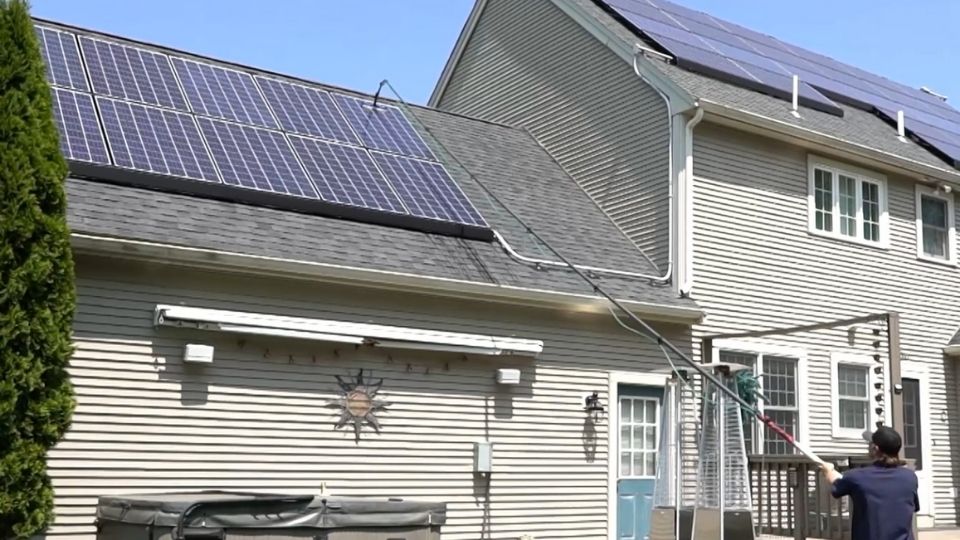
Nu-England Services offers fully insured, expert solar panel cleaning built specifically for New England homes and commercial properties. Our trained technicians use deionized water, manufacturer-approved tools, and follow a process that protects your panels and your warranty. Every visit includes a visual inspection so you know exactly what’s going on up there. Whether you need a one-time deep clean or a recurring maintenance schedule, our special cleaning services team is ready to help. Explore our window and solar panel cleaning page and request your free quote today.
Frequently asked questions
Is rain enough to keep solar panels clean in New England?
No. Rain only provides partial cleaning and can’t remove pollen, salt crust, or bird droppings, so professional cleaning is necessary to maintain peak efficiency.
How much does professional solar panel cleaning improve efficiency?
Regular professional cleaning can recover up to 25% of energy lost due to soiling, with the biggest gains coming after heavy pollen or leaf seasons.
How do I know when my solar panels need cleaning?
A visible drop in your monitoring app output, visible streaking or debris on the glass, or the end of a heavy pollen or storm season are all reliable signals that cleaning is overdue.
Can I clean my solar panels myself?
It’s possible but not recommended. DIY cleaning risks scratches to the anti-reflective coating and can void your warranty, making professional service the safer and more cost-effective choice.
