

TL;DR:
- Professional upholstery cleaning uses specialized equipment and trained technicians to remove deep-seated biological pollutants, promoting healthier indoor air quality. It outperforms DIY methods by reaching padding layers safely, preventing mold, and ensuring proper drying to extend furniture lifespan and protect fabric integrity. Proper method selection and moisture control are vital for optimal results and long-term furniture protection.
Professional upholstery cleaning is the process of using specialized equipment and trained technicians to deeply clean and sanitize furniture fabrics, removing not only visible dirt but also hidden allergens and biological pollutants. When you choose professional upholstery cleaning over a DIY approach, you get deeper extraction, safer fabric handling, and measurable health benefits that a rented carpet shampooer simply cannot deliver. The EPA identifies upholstery as a primary reservoir for mold, bacteria, pollen, and pet dander. Professionals also manage drying times and moisture levels in ways that prevent secondary problems like mold growth. This guide covers every factor worth knowing before you schedule your next cleaning.
Why choose professional upholstery cleaning over doing it yourself?
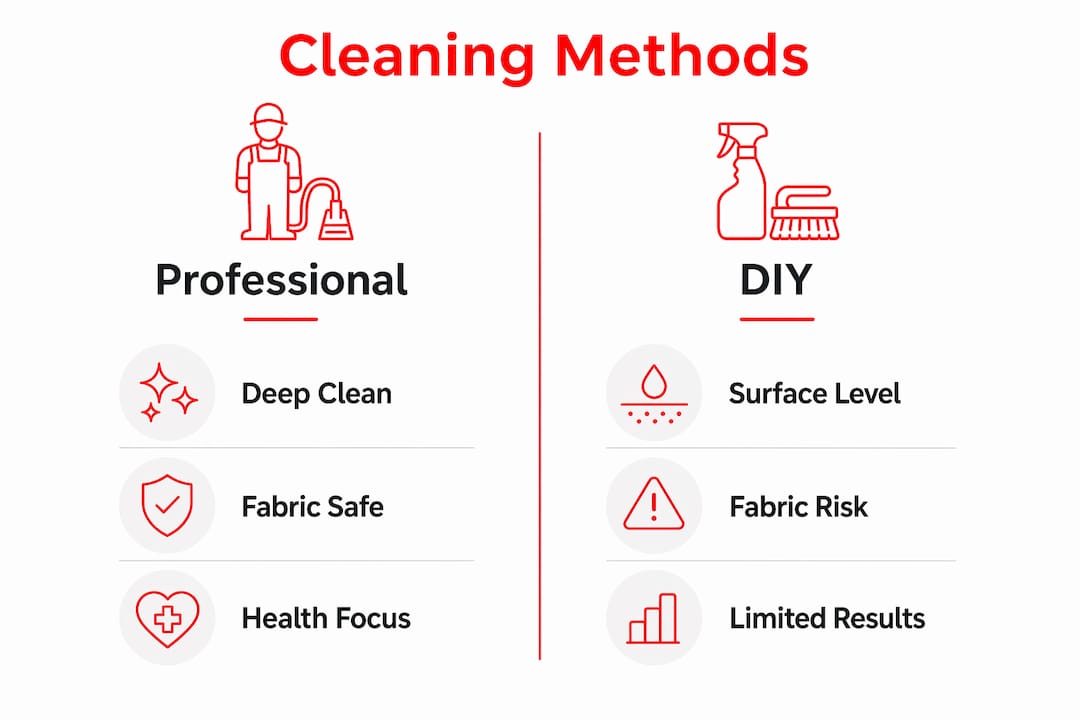
Professional upholstery cleaning outperforms DIY methods on every measurable dimension: cleaning depth, fabric safety, drying time, and long-term cost. The gap is not marginal. It is structural, rooted in the difference between consumer-grade tools and commercial-grade systems operated by trained technicians.
A standard rental machine or store-bought foam cleaner works on the surface layer of fabric. Professional equipment reaches the padding and base layers where most biological contamination actually lives. Professionals use specialized equipment and training to achieve deeper cleaning than typical DIY methods, and they understand fabric codes that determine which cleaning agents and pressures are safe for each material.
Fabric codes are the single most overlooked factor in DIY cleaning. Every upholstered piece carries a tag with a code: “W” means water-based cleaners only, “S” means solvent-based only, “WS” allows both, and “X” means vacuuming only. Using the wrong cleaner on an “S” fabric with water causes shrinkage, discoloration, and permanent fiber distortion. Professionals test on a hidden area before treating the full surface, a step most homeowners skip entirely.
| Factor | Professional cleaning | DIY cleaning |
|---|---|---|
| Cleaning depth | Reaches padding and base layers | Surface layer only |
| Fabric code compliance | Tested and matched to fabric type | Often ignored or unknown |
| Equipment PSI calibration | Adjusted per fabric weight | Fixed, often too high |
| Drying time | 15 min to 12 hrs depending on method | Often 24+ hrs with consumer tools |
| Mold risk | Managed with extraction and drying protocols | High if moisture is not controlled |
Pro Tip: Before any cleaning appointment, locate the fabric tag on your sofa or chair and photograph the cleaning code. Share it with your technician so they can confirm the right method before they start.
The cost argument for DIY also weakens when you factor in time, rental fees, and the real risk of damaging a piece worth several hundred dollars. Professional cleaning extends upholstery lifespan, which means fewer replacements and better long-term value.
What are the key health and hygiene benefits of professional upholstery cleaning?
The most significant benefits of upholstery cleaning are not cosmetic. They are biological. Your sofa, armchairs, and cushioned headboards accumulate contaminants that affect the air you breathe every day, particularly in homes with pets, children, or allergy sufferers.
The US EPA confirms that upholstery acts as a reservoir for biological pollutants including mold spores, bacteria, pollen, and pet dander, all of which degrade indoor air quality and trigger respiratory symptoms. This is not a minor concern. Indoor air can carry higher concentrations of these pollutants than outdoor air, and upholstered furniture is one of the densest collection points in any room.
Professional extraction removes what surface cleaning cannot reach:
- Mold spores embedded in foam padding, especially in humid climates or after any moisture exposure
- Pet dander and hair woven into fabric fibers below the surface layer
- Dust mites and their waste, which are a leading trigger for asthma and eczema
- Bacteria from skin contact, food spills, and airborne deposition
- Pollen tracked in seasonally and trapped in fabric texture
“Most health benefits from professional upholstery cleaning come from removing hidden biological pollutants, not just improving scent or superficial cleanliness.” — US EPA indoor air quality guidance
Moisture control is equally critical to the health outcome. EPA guidance on mold prevention states that upholstery must dry within 24 to 48 hours and indoor humidity must stay below 60% to prevent mold growth after cleaning. A professional service that cleans thoroughly but leaves your sofa damp for two days has created a new problem. This is why method selection and drying protocols are part of the service, not afterthoughts.
For households with allergy sufferers or young children, the importance of upholstery cleaning extends beyond comfort. Reducing the allergen load in your furniture directly reduces exposure time to irritants that cause sneezing, itchy eyes, and respiratory flare-ups.

Hot Water Extraction Method
Hot water extraction, often marketed as “steam cleaning,” injects hot water and cleaning solution deep into the fabric and then extracts it with suction. The method delivers a thorough clean.
How does professional cleaning improve furniture appearance and extend its lifespan?
Appearance restoration is the most visible upholstery cleaning advantage, but it is also the most underestimated. Fabric that looks dull, flat, or permanently stained often responds dramatically to professional extraction. Colors return. Texture revives. Odors that seemed permanent disappear.
Professional cleaning avoids the damage that shortens furniture life. Shrinkage, discoloration, and fiber distortion are all consequences of using the wrong cleaner or too much moisture. Fabric compatibility testing before full treatment prevents these outcomes. A technician who spots a “dry clean only” code and adjusts accordingly saves you from a sofa that comes out of a cleaning session looking worse than before.
The lifespan benefits are concrete:
- Stain removal before stains set permanently preserves fabric color and texture
- Odor elimination through deep extraction removes the source rather than masking it
- Fiber protection through correct cleaning agents prevents brittleness and fraying
- Structural care by some professionals includes inspecting and replacing worn foam or support elements, extending the functional life of the piece
- Warranty compliance for furniture under manufacturer warranty often requires professional cleaning to maintain coverage
Replacing a quality sofa costs anywhere from several hundred to several thousand dollars. A professional cleaning session costs a fraction of that and can add years to the furniture’s useful life. The math favors professional services clearly. You can find practical maintenance habits that complement professional visits in these essential sofa cleaning tips for between-service care.
What should homeowners and renters know before scheduling a service?
Choosing the right professional upholstery service requires more than picking the lowest price. A few targeted questions and practical steps will protect your furniture and get you the outcome you expect.
- Request fabric code testing. A reputable technician will test a hidden area before treating the full piece. If they skip this step, that is a warning sign.
- Ask about drying time and ventilation. Plan around the drying window. Open windows, run ceiling fans, and if possible, schedule cleaning on a dry day with low humidity.
- Check for eco-friendly cleaning agents. Harsh solvents leave residue that off-gasses into your home air. Ask specifically whether the products used are low-VOC or certified safe for indoor use.
- Schedule regular maintenance cleanings. A single deep clean is not a permanent fix. Most upholstery benefits from professional attention once or twice per year, depending on household traffic and pet ownership.
- Post-cleaning care matters. Vacuum weekly, address spills immediately with a clean cloth and no scrubbing, and avoid direct sunlight on cleaned fabric to prevent fading.
For homeowners in New England, the regional humidity adds urgency to moisture management. Damp summers and cold winters create conditions where mold grows quickly if upholstery is not dried properly after cleaning. Choosing a local service familiar with these conditions is a practical advantage. Nes-co’s upholstery cleaning in Massachusetts addresses exactly this regional context with fabric-appropriate methods and rapid drying protocols.
Key takeaways
Professional upholstery cleaning delivers health, durability, and appearance benefits that DIY methods cannot replicate, making it the most cost-effective choice for maintaining furniture long-term.
| Point | Details |
|---|---|
| Health comes first | Professionals remove mold, bacteria, pollen, and pet dander embedded below the fabric surface. |
| Fabric codes prevent damage | Technicians test compatibility before treating, preventing shrinkage, discoloration, and fiber distortion. |
| Lifespan and cost savings | Regular professional cleaning extends furniture life and avoids premature replacement costs. |
| Moisture control is non-negotiable | Upholstery must dry within 24 to 48 hours to prevent mold growth after any cleaning method. |
What I’ve learned after years of watching homeowners get this wrong
I have seen the same pattern repeat more times than I can count. A homeowner rents a machine, spends a Saturday afternoon cleaning the sofa, and feels good about it. Six weeks later, there is a musty smell coming from the cushions. The fabric looks clean on the surface, but the padding is holding moisture that never fully dried. That smell is mold. It was preventable.
The mistake is not effort. Most people who go the DIY route are genuinely trying to take care of their furniture. The mistake is underestimating what is actually inside upholstery and overestimating what a consumer tool can extract. Biological pollutants do not live on the surface. They live in the foam, the batting, and the base fabric. Getting them out requires equipment that generates real extraction force, not just surface agitation.
The other thing I consistently see overlooked is the fabric code. People assume that if a cleaner is labeled “safe for upholstery,” it is safe for their upholstery. It is not. A velvet sofa and a microfiber sectional require completely different approaches. Getting this wrong does not just mean a subpar clean. It means permanent damage to a piece you paid good money for.
Think of professional upholstery cleaning the same way you think about professional carpet cleaning or HVAC maintenance. It is not a luxury. It is scheduled maintenance that protects a significant investment and keeps your indoor environment genuinely clean, not just visually clean.
Restore your upholstery with Nes-co’s professional cleaning services
Nes-co has served New England homeowners since 1968 with cleaning methods built around fabric safety, rapid drying, and genuine allergen removal. Their technicians select the right approach for your specific upholstery, targeted hot water extraction.
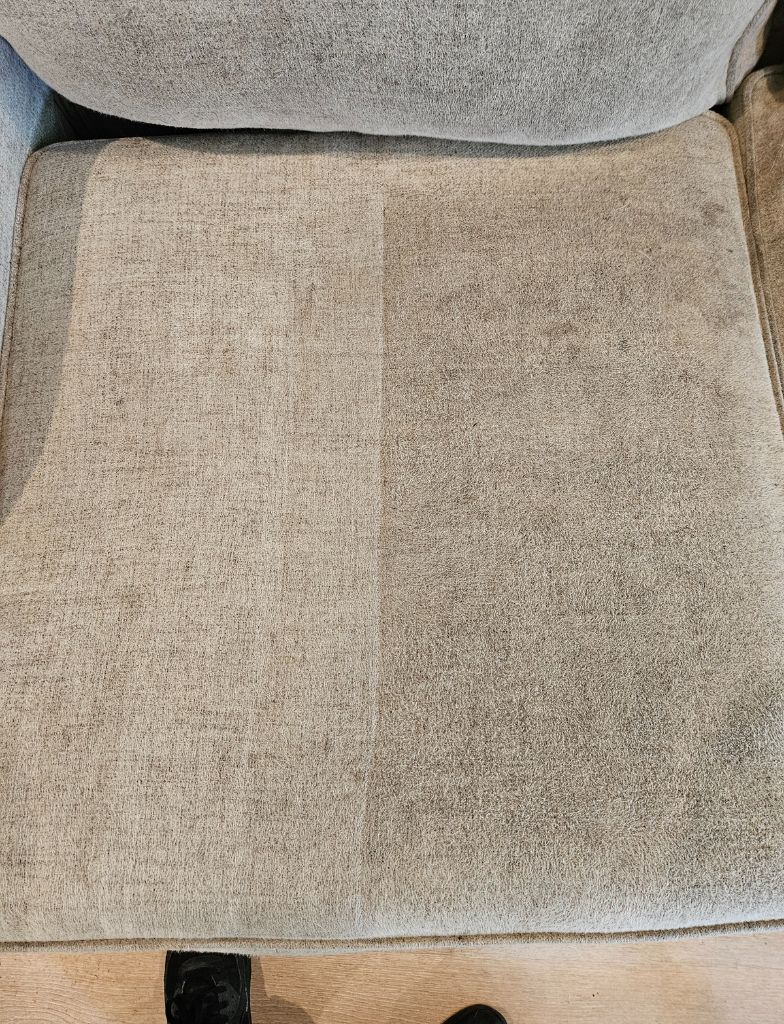
If you are in Massachusetts or the surrounding region, Nes-co’s specialized cleaning services cover residential upholstery with the moisture management protocols and fabric-compatible techniques this article describes. Fast drying, eco-conscious products, and a team that has been doing this work for over five decades. Request a free quote and schedule your cleaning before New England’s humidity season makes moisture control even more critical.
FAQ
What does professional upholstery cleaning actually remove?
Professional upholstery cleaning removes biological pollutants including mold spores, bacteria, pollen, pet dander, and dust mites embedded in fabric and padding layers. These contaminants affect indoor air quality and cannot be fully extracted with consumer-grade tools.
How long does upholstery take to dry after professional cleaning?
Hot water extraction typically leaves upholstery damp for 6 to 12 hours. Proper ventilation and low indoor humidity speed up the process.
Is professional upholstery cleaning worth it for renters?
Yes. Renters benefit from professional cleaning because it restores furniture condition, removes allergens, and prevents odor or mold that could affect a security deposit.
How often should upholstery be professionally cleaned?
Most upholstered furniture benefits from professional cleaning once or twice per year. Households with pets, children, or allergy sufferers should schedule more frequently to manage allergen buildup.
Can professional cleaning damage my furniture?
Damage is prevented when technicians check fabric cleaning codes and test on a hidden area before full treatment. Using the wrong cleaner or pressure on the wrong fabric causes shrinkage or discoloration, which is why professional assessment before cleaning is a standard part of a reputable service.
