
TL;DR:
- Effective floor care focuses on cleanliness safety and durability to protect property value and safety.
- The right equipment and tailored maintenance programs extend floor life and prevent costly repairs.
- Regular assessments, proper budgeting, and professional services ensure long-term flooring performance and safety.
Your floors might look clean. But looks can be deceiving. Many commercial floors that pass a quick visual check are actually harboring bacteria, degrading faster than they should, and creating slip hazards that put your business at risk. For property managers and business owners across New England, floor care is not just a maintenance line item. It is a direct investment in safety, professional image, and long-term cost control. This guide breaks down the essential features every facility manager should demand from a floor care program, from the right equipment and cleaning protocols to realistic budgeting and vendor evaluation.
Table of Contents
Key Takeaways
| Point | Details |
|---|---|
| Match methods to needs | Use cleaning tools, equipment, and scheduling that fit your building’s size, floor materials, and traffic patterns. |
| Modern equipment saves money | Invest in updated tools and advanced sealers to lower costs and improve results over time. |
| Focus on consistency | Follow industry standards and adjust cleaning frequency based on actual use, not just the calendar. |
| Verify true value | Assess service contracts beyond price—include tool quality, protocols, and cost-saving practices. |
Understanding the essentials of commercial floor care
Most people think of floor care as mopping and vacuuming. The reality is far more structured. Effective commercial floor care covers three distinct outcomes: cleanliness, safety, and durability. When any one of these is missing, your program is incomplete, no matter how often the crew shows up.
Cleanliness goes beyond removing visible dirt. It means reducing microbial load on surfaces, controlling allergens, and maintaining a professional appearance that reflects well on your business. Tenants, clients, and employees notice dirty grout lines, scuffed tile, and dull hardwood. These details shape first impressions and signal how well a property is managed.
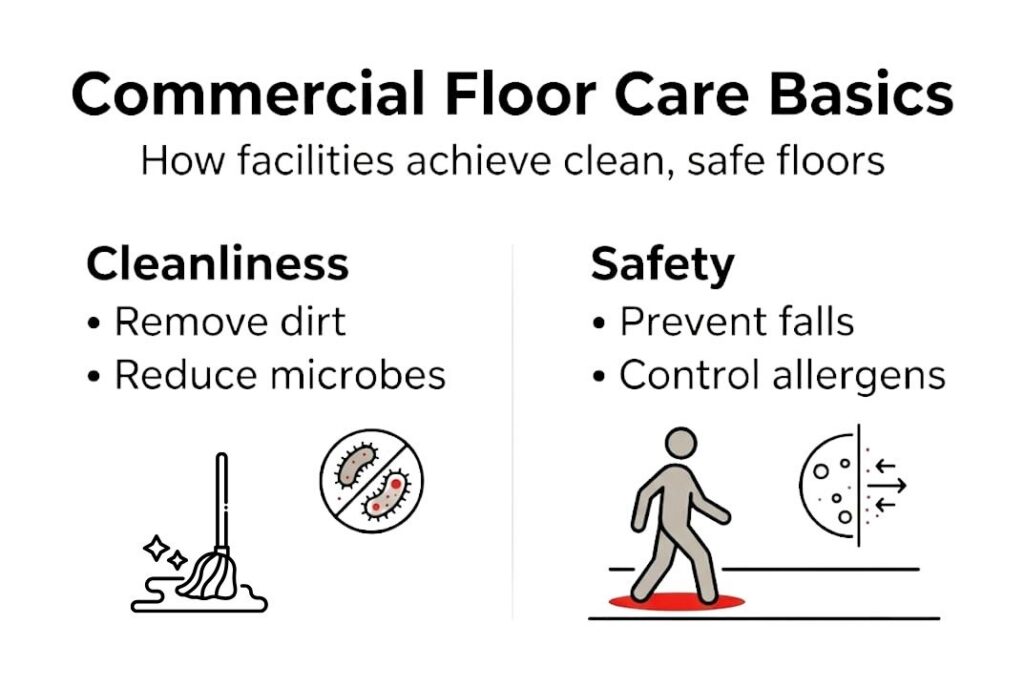
Safety is where many programs fall short. Slip-and-fall accidents are among the most common causes of workplace injuries, and improper cleaning methods can actually make floors more slippery, not less. Using the wrong cleaning agent on a polished surface, or leaving floors wet without proper signage and airflow, creates liability. Contamination control is equally important in environments like healthcare offices, food service spaces, and schools.
Durability is the long game. Floors are expensive assets. Replacing commercial tile, hardwood, or carpet prematurely because of poor maintenance practices is a budget disaster. The goal of a strong floor care program is to extend the life of every surface you manage.
Here is what a complete program addresses:
- Surface-specific cleaning methods matched to material type
- Scheduled deep cleaning to prevent buildup and surface degradation
- Slip-resistance testing and contamination control protocols
- Documented results and performance benchmarks
- Staff training on proper technique and product use
“ISSA Power Clean protocols establish measurable, consistent standards for commercial cleaning outcomes, moving the industry away from guesswork and toward verifiable results.”
Understanding what industrial cleaning means for facilities is the first step toward building a program that actually delivers on all three outcomes.
Key equipment and tools for modern floor care
The right equipment is not a luxury. It is a prerequisite for consistent, professional results. And the wrong equipment does not just underperform. It can damage floors, waste labor hours, and create false confidence that the job is done when it is not.
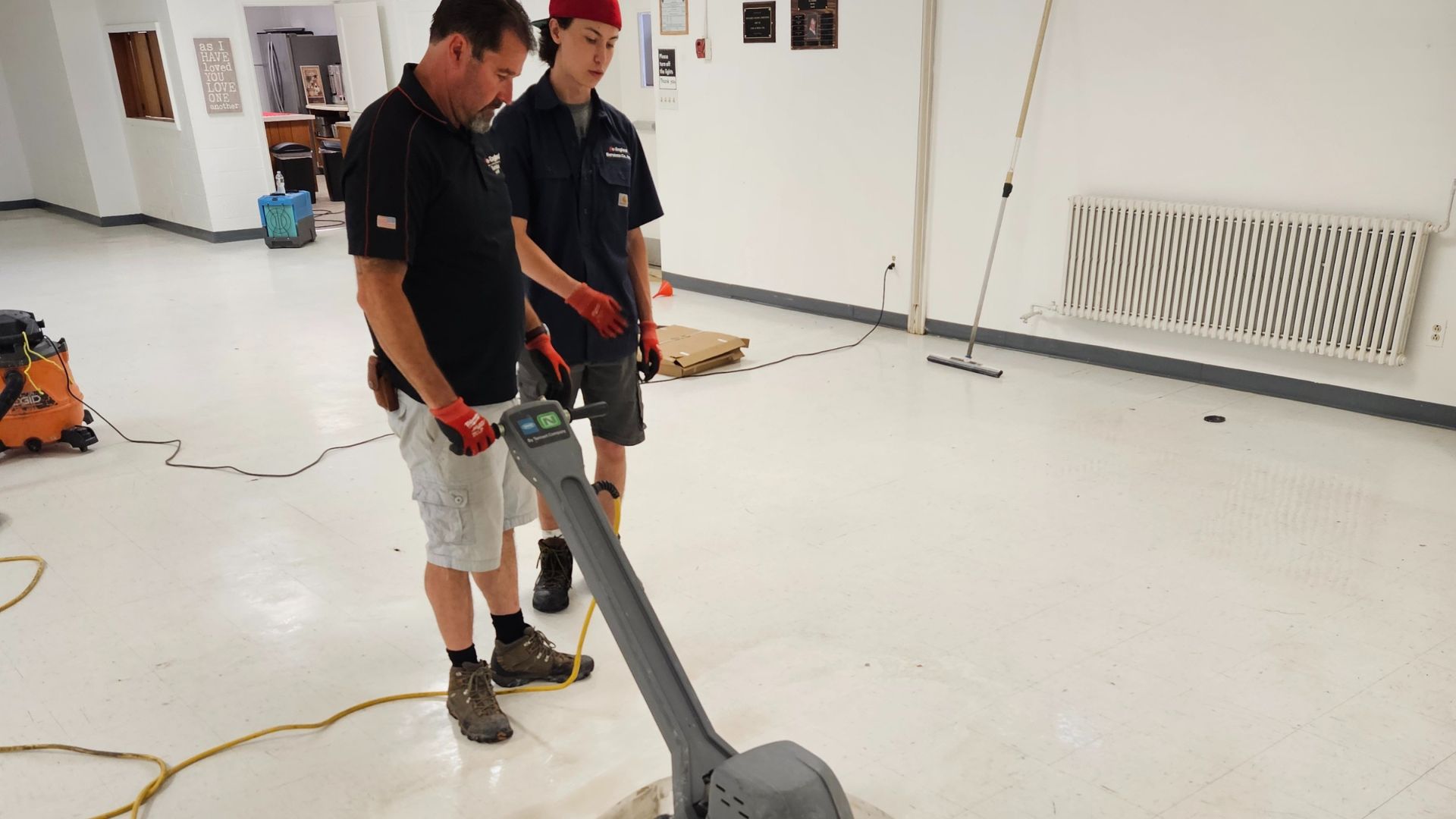
For hard surface floors, scrubbers are the workhorses. Walk-behind scrubbers suit spaces under 30,000 sq ft, while ride-on models for larger areas can boost productivity by up to 400%, making them essential for large warehouses, distribution centers, and multi-floor commercial buildings. Cylindrical brush heads are ideal for grouted or profiled surfaces where flat pads skip over debris trapped in texture.
High-filtration vacuums matter more than most managers realize. Standard vacuums recirculate fine particles back into the air. HEPA-rated units capture particles down to 0.3 microns, which is critical in medical offices, schools, and any space with allergy-sensitive occupants.
Auto-dispensing systems take the guesswork out of chemical dilution. Overuse of cleaning chemicals is one of the most common and costly mistakes in commercial cleaning. Too much product leaves residue that attracts dirt faster and can dull floor finishes. Auto-dispensing ensures the right concentration every time.
For hygiene-critical zones, microfiber is the standard. Unlike traditional string mops that spread bacteria from one area to another, microfiber pads are color-coded, single-use per zone, and far more effective at lifting and trapping contaminants.
| Equipment type | Best application | Key advantage |
|---|---|---|
| Walk-behind scrubber | Under 30,000 sq ft | Cost-effective, maneuverable |
| Ride-on scrubber | Over 50,000 sq ft | High productivity, consistent coverage |
| HEPA vacuum | Offices, healthcare, schools | Air quality protection |
| Auto-dispenser | All hard surface areas | Accurate chemical dilution |
| Microfiber system | Restrooms, kitchens, labs | Cross-contamination prevention |
Pro Tip: Cheap mops are a false economy. When you factor in labor time, product waste, and the faster floor degradation from improper cleaning, a quality commercial cleaning machine pays for itself within months. Evaluate equipment on total cost of ownership, not sticker price. And do not forget that carpet care requires its own specialized tools separate from hard surface equipment.
Best practices for routine and deep cleaning
Even the best equipment delivers poor results without a solid cleaning system behind it. Routine and deep cleaning serve different purposes, and both are essential.
Routine cleaning keeps surfaces presentable and prevents buildup from becoming a bigger problem. A standard routine cycle looks like this:
- We recommend not sweeping at all. It stirs up a lot of dust to resettle again. The dust mops when used correctly or a commercial backpack vacuum with 3 levels of filters (1 being HEPA) is ideal
- Spot clean high-traffic areas and spills as they occur
- Damp mop or auto-scrub based on floor type and traffic volume
- Inspect edges, corners, and grout lines that machines often miss
- Document results and flag any surface concerns for follow-up
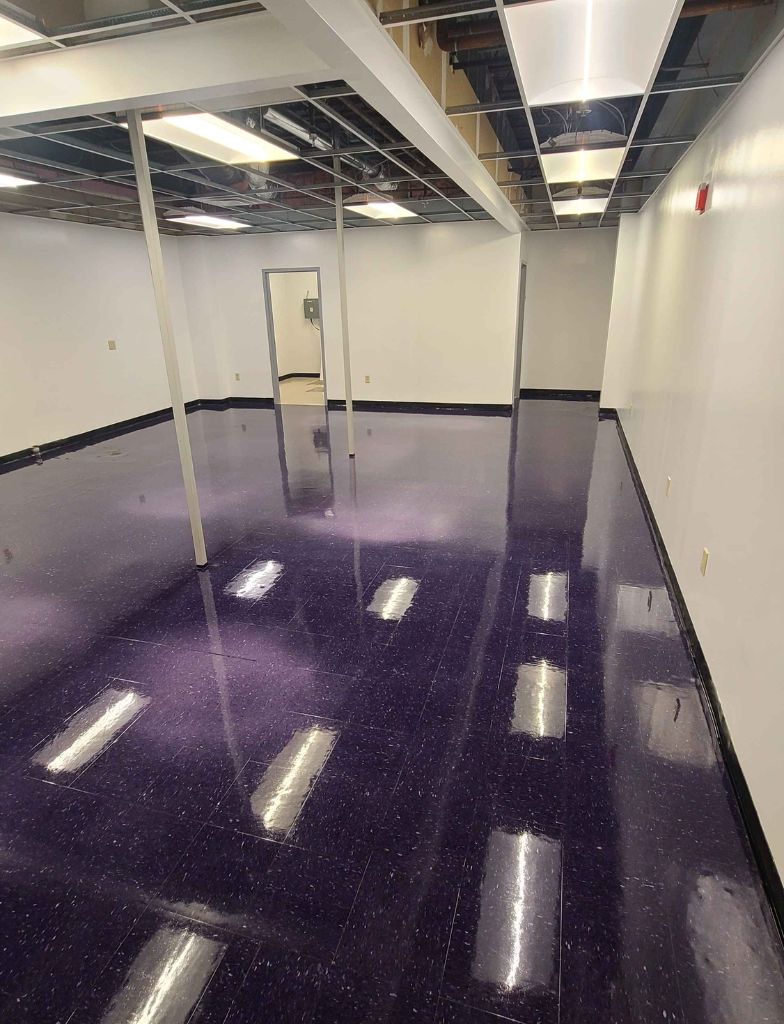
Deep cleaning goes further. It involves restorative procedures like stripping old wax or finish, buffing to restore surface sheen, and applying molecular sealers that bond to the floor at a chemical level rather than sitting on top. These procedures are not daily tasks. They are scheduled based on actual floor condition and traffic patterns.
The biggest mistake managers make is scheduling cleaning by the calendar rather than by need. A lobby with 500 daily visitors needs different attention than a back office used twice a week. Frequency should be driven by traffic and floor condition, not a fixed schedule that treats all areas the same.
On the cost side, ISSA 612 production rates benchmark damp mopping at 2,500 to 4,000 sq ft per hour, which gives you a useful baseline when evaluating whether your current crew is performing efficiently. If your vendor is significantly below that range, it is worth asking why.
Understanding the full commercial cleaning process helps you set realistic expectations and hold vendors accountable to measurable outcomes.
Cost considerations and budgeting for floor maintenance
Budgeting for floor care is where many property managers make costly assumptions. The lowest bid is almost never the best value, and the true cost of poor floor maintenance shows up later in emergency repairs, early floor replacement, and liability exposure.
Here is a realistic look at what commercial floor care typically costs:
| Service type | Typical rate | Key cost factors |
|---|---|---|
| Routine mopping/scrubbing | $0.05 to $0.35/sq ft/month | Size, frequency, floor type |
| Northeast office cleaning | $0.12 to $0.20/visit | Building access, scope |
| Traditional VCT strip and wax | Annual cost, recurring | Labor intensive, short-term results |
| Molecular sealer application | Every 3 to 5 years | Higher upfront, major long-term savings |
Molecular sealers applied every 3 to 5 years cost up to 80% less long-term than traditional annual strip-and-wax methods. That is a significant budget shift that most managers overlook because they are focused on the lower line item for this year rather than the total cost over five years.
Hidden savings also come from better equipment and scheduled deep cleans. Floors that are properly maintained simply last longer. That means fewer emergency repairs, fewer full replacements, and lower total cost of ownership across your portfolio.
Before signing any service contract, ask vendors these questions:
- What production rates do your crews operate at, and how do you track them?
- What cleaning products do you use, and are they appropriate for my floor types?
- How do you handle deep cleaning versus routine maintenance, and what triggers each?
- What certifications do your team members hold?
- Can you provide references from similar commercial properties in the region?
Evaluating bids on value rather than headline price protects the long-term value of your flooring investment and avoids the cycle of cheap service followed by expensive repairs.
Why most floor care programs fall short—and how to fix them
After years of working with commercial properties across New England, we have seen the same pattern repeat. A property manager chooses the lowest bid, gets a static cleaning schedule, and uses whatever generic product the vendor stocks. The floors look acceptable for a while. Then the finish degrades, the grout darkens, and a section of tile needs replacing three years ahead of schedule.
The root cause is almost always a commodity approach. Floor care gets treated like a utility rather than a skilled service. The fix is not complicated, but it does require intentionality.
Customize your program to your actual floors, your actual traffic, and your actual business needs. A retail space with polished concrete needs a completely different program than a medical office with luxury vinyl tile. Generic solutions fail both.
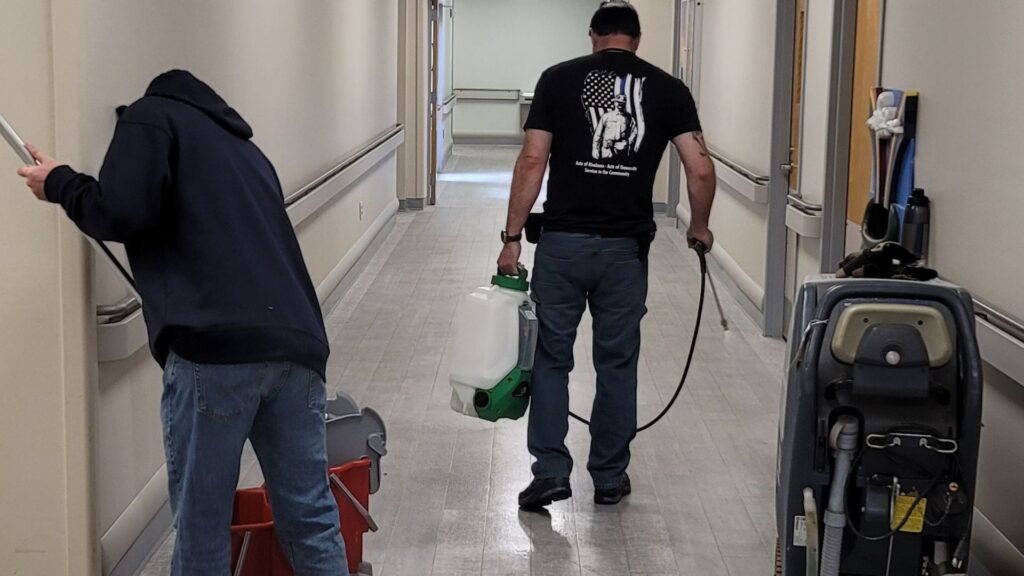
Invest in quality tools and trained technicians. The difference in results between a trained crew with professional equipment and an undertrained team with budget tools is dramatic.
Pro Tip: Build a simple audit checklist. Walk your facility monthly and score each zone on cleanliness, surface condition, and safety. Share the results with your vendor. This one habit closes more performance gaps than any contract clause ever will. You can find more practical guidance on our cleaning advice blog.
Upgrade your facility’s floor care with expert help
Applying these principles takes the right partner. Nu-England Services has been serving commercial properties across New England since 1968, bringing decades of hands-on expertise to floor care, cleaning, and restoration.
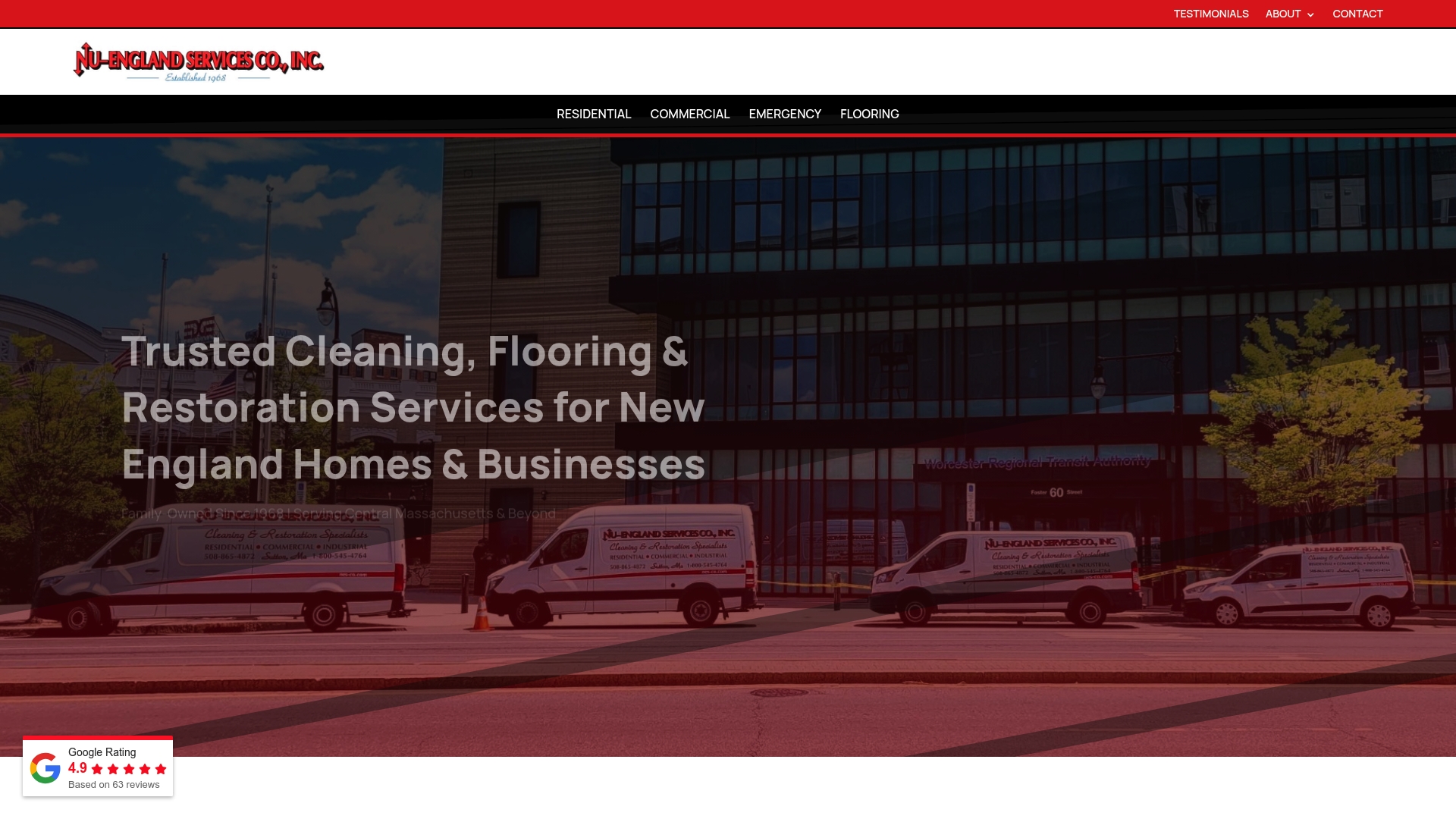
Whether you need specialized cleaning services tailored to your facility’s specific surfaces and traffic demands, or you are considering new flooring installation to replace worn-out surfaces, we bring local knowledge and professional-grade solutions to every project. Our team understands the unique challenges of New England commercial properties, from high-humidity summers to salt-tracked winters. Nu-England Services offers free assessments and custom quotes, so you can make informed decisions without guesswork.
Frequently asked questions
What is the most cost-effective way to maintain commercial floors?
Using molecular sealers every 3 to 5 years is up to 80% cheaper long-term than traditional annual strip-and-wax methods, while also reducing the frequency of disruptive deep cleaning sessions.
How do I choose the right equipment for my building’s size?
For spaces under 30,000 sq ft, walk-behind scrubbers are the practical choice. Ride-on scrubbers for larger spaces can increase productivity by up to 400%, making them worth the investment for big facilities.
How often should commercial floors be cleaned?
There is no universal answer. Cleaning frequency should match traffic volume and floor condition rather than a fixed calendar, which means high-traffic zones may need daily attention while low-use areas can be serviced less often.
What do commercial floor cleaning services typically cost in the Northeast?
Northeast office rates run $0.12 to $0.20 per visit, with broader commercial floor care ranging from $0.05 to $0.35 per sq ft per month depending on scope, frequency, and floor type.
Does using microfiber really matter in commercial cleaning?
Absolutely. Microfiber prevents cross-contamination in hygiene-critical areas far more effectively than traditional mops, which tend to redistribute bacteria rather than remove it.
