

For most homeowners, stain-guard protection is worth it. It buys you critical blotting time when spills happen, slows fiber degradation from dry soils, and keeps upholstery looking newer between professional cleanings. The single best action you can take: schedule protection immediately after a professional clean, when fibers are open and the coating bonds most effectively.
Who benefits most:
- Homes with kids, pets, or frequent entertaining
- Natural-fiber pieces like wool rugs and linen sofas
- Light-colored upholstery where stains show fast
- High-traffic rooms where furniture takes daily punishment
Who can reasonably skip it:
- Tightly woven synthetic microfiber that already resists liquid naturally
- Furniture in low-use rooms with minimal spill risk
- Pieces you plan to replace within a year or two
Table of Contents
What stain protection is and the main types you’ll encounter
Stain-guard protection is a topical textile treatment that lowers a fabric’s surface energy so liquids bead on the surface rather than wicking into the fibers. It does not seal the fabric. It creates a microscopic barrier that slows penetration and gives you time to blot before a spill becomes a stain.
Three main categories exist. Factory-applied finishes come on most new carpets and some upholstery from the manufacturer. They work well when the furniture is new, but factory protection wears off with traffic, vacuuming, and cleaning. Professional post-cleaning applications use industrial-grade formulations applied with specialized equipment after a deep clean. Retail aerosol or trigger sprays are the DIY option, widely available at hardware and home goods stores.
On the formulation side, the key distinction is fluorinated versus non-fluorinated chemistry. Fluorinated products (including PFAS-based formulas) historically offered strong oil and water repellency. Non-fluorinated, water-based alternatives are safer for indoor use and the environment, and they perform well against water-based spills, though they can be weaker against oily stains. That tradeoff matters more than most product labels admit.
How stain guards work on fabric fibers
The mechanism is straightforward. Every fiber has a surface energy level. When a liquid’s surface tension is higher than the fiber’s surface energy, the liquid beads up and sits on top rather than spreading and soaking in. Stain-guard treatments work by lowering the fiber’s surface energy so that most common household liquids bead rather than wick.
Think of it like a freshly waxed car hood in the rain. Water rolls off because the wax surface energy is lower than water’s surface tension. The moment that wax wears thin, water starts sheeting across the paint instead.
The critical point: no treatment makes fabric permanently stain-proof. Pressure, dwell time, and oil-based soils can still penetrate. A red wine spill on a treated sofa still needs immediate attention. What the treatment does is extend your window from a few seconds to a minute or more, which is often the difference between a quick blot and a permanent mark. Treated fabric also remains breathable when properly cured, forming a porous layer that resists liquid without making the fabric feel stiff or plastic.
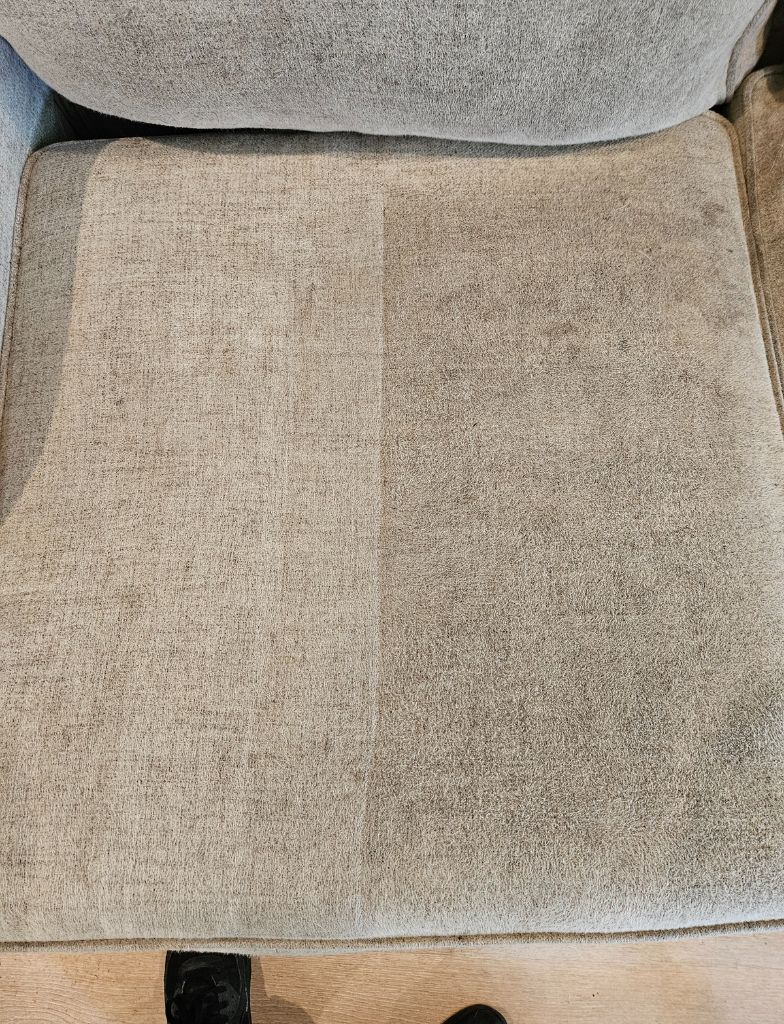
Real-life benefits homeowners get from stain-guard protection
The practical gains show up in everyday moments, not just emergencies.
Core benefits:
- Spills bead on the surface, making spot cleanup faster and less stressful
- Dry soils and gritty particles are repelled, so vacuuming removes more debris before it scratches fibers
- Oily soils don’t embed as deeply, reducing the frequency of full professional cleanings
- Natural fibers like wool, which can hold close to a third of their weight in water before feeling wet, get meaningful protection against rapid staining
- Fabric colors and texture stay fresher longer because abrasive particles aren’t grinding against fibers with every footstep
Consider a few common scenarios. A household with a dog means muddy paw prints and the occasional accident. Treated upholstery gives you time to grab a cloth before the soil sets. Holiday entertaining with red wine and coffee on a cream-colored sofa becomes far less nerve-wracking. For area rugs in high-traffic spaces, protection slows the visual wear that makes rugs look dingy within a year of purchase.
Take a coffee spill as a quick example. On an untreated linen sofa, coffee begins wicking into fibers almost immediately. On a treated surface, it beads for 30–60 seconds. That window lets you blot (not rub) the liquid away before tannins bond to the fiber. The stain that would have required professional extraction often disappears with a damp cloth.
Pro Tip: Stain protection also makes professional stain removal easier and less expensive when you do need it, because soils haven’t bonded as deeply to the fiber.
Professional treatments vs store-bought DIY sprays: pros, cons, and when to choose each
The gap between professional and retail application is wider than most homeowners expect.
| Factor | Professional application | DIY retail spray |
| Durability | Several years with proper care | 6–12 months; may need reapplication after 1–2 cleanings |
| Coverage consistency | Uniform, penetrating application with professional tools | Variable; easy to miss areas or over-apply |
| Formulation quality | Industrial-grade, often water-based, non-aerosol | Aerosol-based; PFAS content varies by brand |
| Indoor air quality | Controlled application, lower inhalation risk | Aerosol sprays pose respiratory risks in confined spaces |
| Best use case | High-value pieces, natural fibers, post-professional clean | Low-traffic items, synthetic fabrics, spot reapplication |
| Timing | Applied immediately after professional cleaning | Applied to clean, dry fabric per label instructions |
When DIY is reasonable:
- A synthetic-fiber accent chair in a low-traffic room
- Spot reapplication between professional visits
- Testing a product on a small, hidden area before committing
When to hire a professional:
- Wool rugs, silk, or any natural-fiber upholstery
- Pieces where appearance directly affects home value
- After any professional deep clean, when fibers are clean and receptive
The timing point deserves emphasis. Applying protection immediately after a professional cleaning produces the best bond and the longest effective lifespan. Clean fibers allow the polymer to penetrate and cure properly. Applying over soiled or damp fabric produces a weaker, shorter-lived result. NES, Co.’s team at Nu-England Services follows this sequence as standard practice, which is why their professional upholstery cleaning and protection services are offered together.
How long stain guards last and what it typically costs
Lifespan varies considerably depending on how the product was applied and how the furniture is used.
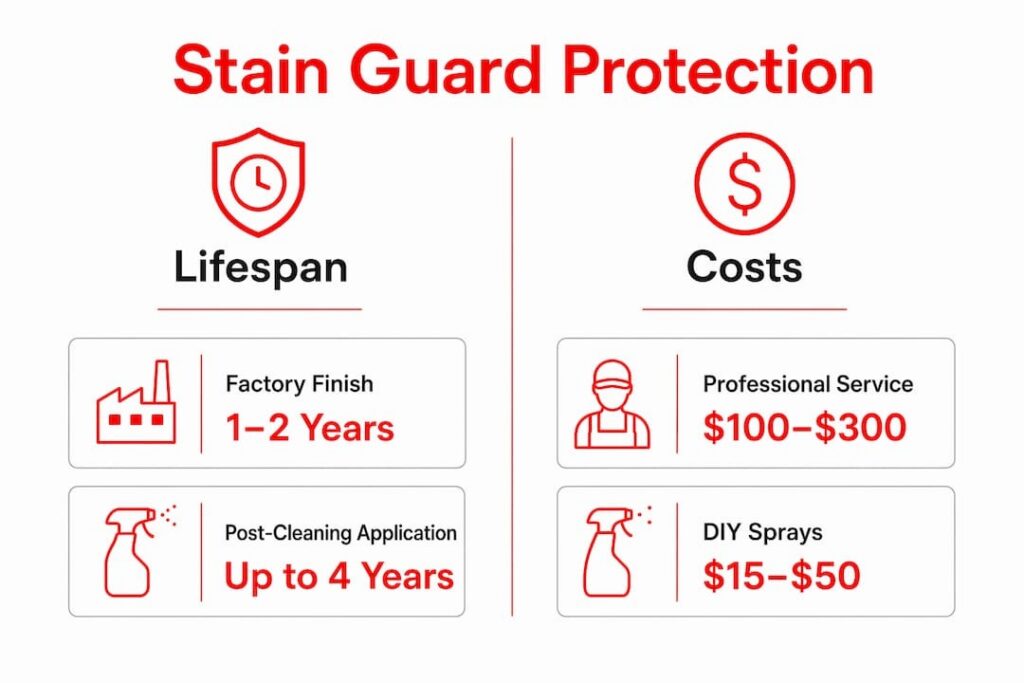
| Protection type | Typical lifespan | Key factors |
| Factory-applied finish | Wears off within 1–2 years of normal use | Traffic, vacuuming, cleaning frequency |
| Retail DIY spray | 6–12 months; may degrade after 1–2 cleanings | Application quality, fiber type |
| Professional application | Several years with proper maintenance | Formula quality, traffic level, reapplication after each professional clean |
Laboratory testing shows protection can be reduced by 30% or more each year through normal use, vacuuming, and cleaning. That is not a flaw in the product; it is the nature of any topical coating. The practical implication is that protection is a consumable maintenance item, not a one-time fix.
On cost, professional protection is typically priced per piece or per room and is often bundled with a cleaning service. Exact pricing varies by provider, region, and fabric type. Retail sprays run from roughly $10–$20 per can at most hardware stores. The real cost question is not the product price but what you spend on professional stain removal or furniture replacement when protection is absent.
Factors that shorten protection life:
- High foot traffic and daily use
- Frequent vacuuming with a beater-bar attachment
- Harsh or alkaline cleaning products
- Outdoor exposure (outdoor fabrics need reapplication more often than indoor pieces)
Maintenance after protection and the questions to ask a professional
Good maintenance habits extend the life of any treatment significantly.
Spill response (follow this order):
- Act immediately. Every second the liquid sits, surface tension works against you.
- Blot firmly with a clean white cloth. Never rub; rubbing spreads the spill and drives it deeper.
- Work from the outside edge of the spill toward the center to avoid spreading.
- For coffee, tea, or wine, use cool water and a pH-neutral cleaner. Hot water can set protein-based stains.
- For pet accidents, use an enzyme-based cleaner after blotting to break down odor compounds.
- If the stain persists after two attempts, stop and call a professional. Repeated scrubbing damages fibers.
Routine care tips:
- Vacuum upholstery weekly with a soft brush attachment, not a beater bar
- Avoid silicone-based or alkaline cleaning sprays, which degrade the coating
- Check protection performance every 6–12 months by dripping a few drops of water on the fabric. If it soaks in rather than beading, it is time to reapply. These carpet maintenance habits apply equally to upholstered furniture.
What research and professional experience say about effective use
The clearest takeaway from practitioner experience and published research is that stain protection is a timing-sensitive, consumable tool, not a permanent solution. Applying it immediately after a professional cleaning is the single highest-impact decision a homeowner can make, because clean fibers allow the polymer to bond deeply and cure fully.
Fiber type matters more than most homeowners realize. Wool and other natural fibers absorb liquid faster than synthetics, so they benefit most from protection. Synthetic fibers like nylon and polyester have some inherent resistance, but protection still adds meaningful defense against oily soils and dry particle abrasion. The professional care needs of rugs differ by fiber, which is why a one-size-fits-all retail spray is rarely the right answer for a valuable wool piece.
The most important mindset shift: your reaction speed matters more than the product itself. Protection buys time; it does not replace attentiveness. A homeowner who blots a spill within 30 seconds on a treated surface will almost always outperform one who waits two minutes on an untreated one. The coating is the buffer, not the solution.
Simple rules of thumb drawn from the research:
- Reapply after every professional cleaning, without exception
- Test protection annually with a water-drop check
- Choose professional application for any piece worth more than you’d spend on replacement
- Never assume protection is still active on furniture older than 12 months without testing it
Key Takeaways
Stain-guard protection delivers real, measurable benefits for most homeowners, but only when applied correctly, timed well, and maintained with consistent habits.
| Point | Details |
| Apply after a professional clean | Post-cleaning application bonds best and delivers the longest effective lifespan. |
| Lifespan is finite | Retail sprays last 6–12 months; professional applications last longer but still need reapplication after each deep clean. |
| Natural fibers need it most | Wool and linen absorb liquid faster than synthetics, making protection most valuable on those pieces. |
| NES, Co. applies protection post-clean | Nu-England Services offers professional protection services in New England, timed correctly after cleaning for best results. |
The honest case for stain protection
Most of the skepticism about stain-guard protection comes from one of two places: people who bought a cheap aerosol spray, applied it to a dirty sofa, and saw no difference, or people who assumed protection meant they never had to act quickly on a spill. Both groups are right that their experience was disappointing. Neither group used the product correctly.
The research is clear that protection works when it is applied to clean fibers, cured properly, and paired with fast spill response. The chemistry has also improved.
What I tell homeowners is this: protection is not a substitute for maintenance, and it is not a magic shield. It is a buffer that gives you a fighting chance when life happens on your furniture. For a wool rug or a light-colored linen sofa, that buffer is worth every dollar. For a dark synthetic microfiber chair in a low-traffic study, you can probably skip it. The decision should be based on what you own, how you live, and whether you want to protect that investment.
NES, Co.’s post-cleaning protection service for New England homeowners
NES, Co., operating as Nu-England Services since 1968, applies stain protection as part of a complete cleaning and care sequence for upholstery, carpets, and rugs throughout New England. The difference from a retail spray is the timing and the formulation: protection goes on immediately after a professional deep clean, when fibers are clean and receptive, using water-based products with full SDS transparency available on request.

For homeowners with wool rugs, natural-fiber upholstery, or high-traffic rooms, this is the most cost-effective way to extend the life of furniture you have already invested in. NES, Co.’s team will walk you through the product being used, the expected lifespan for your specific fabric, and the reapplication schedule that makes sense for your home. Request a quote for specialty cleaning and protection services and get a clear answer on what your furniture actually needs.
Authoritative sources and further reading
A high-authority resource worth bookmarking if you want to verify regulatory and safety claims independently.
Hansen Steam Way’s practitioner guide on carpet and fabric protectors explains the consumable nature of protection coatings in plain language, including the lab-tested degradation rates that set realistic expectations for reapplication frequency.
