
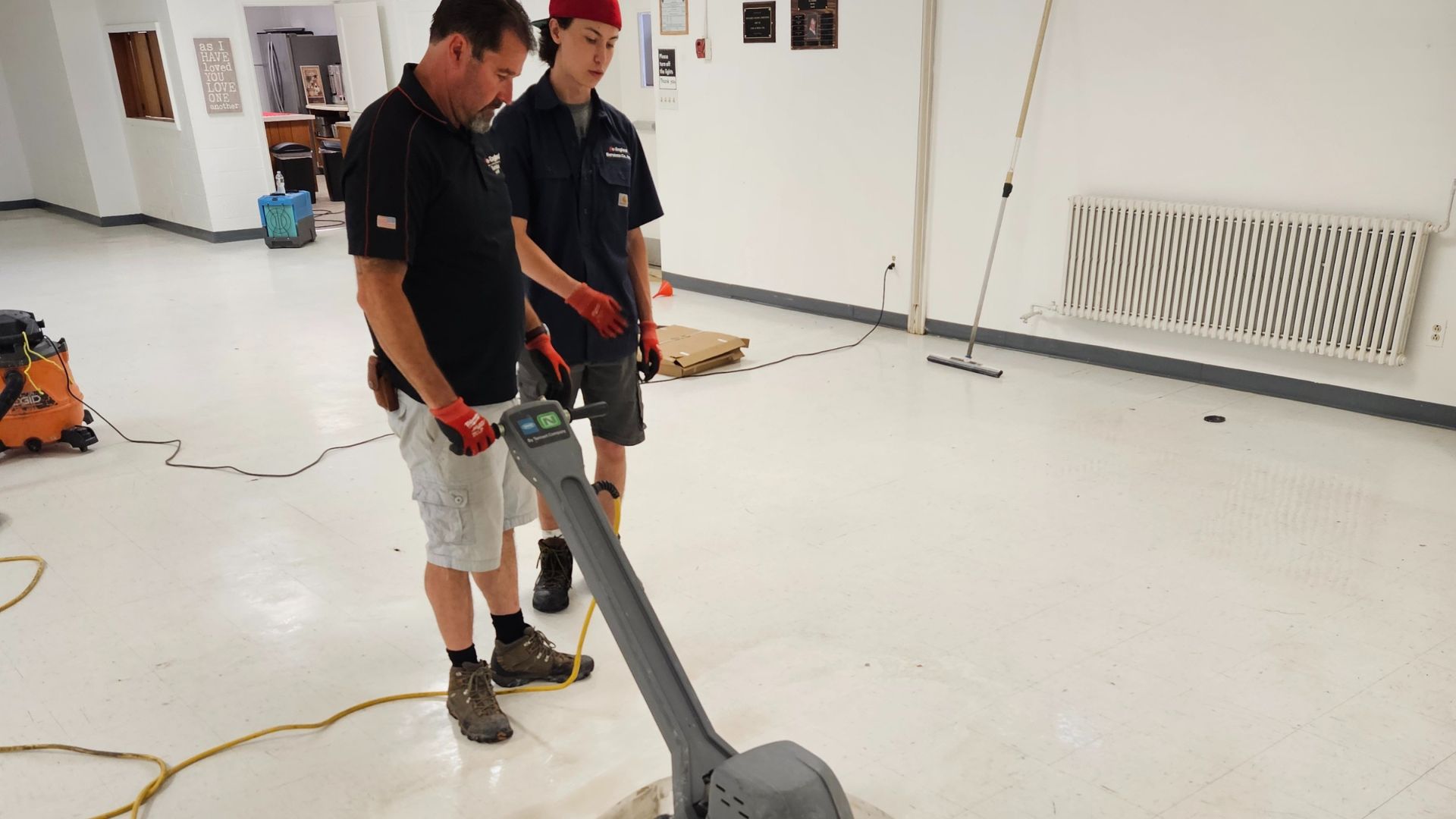
Hiring professional commercial cleaners delivers measurable gains in employee health, productivity, facility longevity, and customer impression, often offsetting or exceeding what the service costs. The EPA links routine building maintenance and cleaning to healthier indoor environments and lower pathogen exposure, and at least one controlled workplace study found a real reduction in sick days after cleaning quality improved. Success shows up in numbers you can track:
- Fewer sick days and less absenteeism-driven overtime
- Lower long-term maintenance and replacement costs on floors, carpets, and fixtures
- Measurable improvement in cleanliness audits or walkthrough scores
- A front-of-house impression that holds up under a client’s first glance
Key Takeaways
Professional commercial cleaning pays for itself through fewer sick days, longer asset life, and stronger customer impressions, often at a lower total cost than in-house staffing.
| Point | Details |
| Health and productivity | Better IEQ correlates with fewer sick days; one intervention study recorded a 12.5% drop in sickness absence. |
| Asset preservation | Routine floor and carpet care prevents the grit damage that leads to early replacement costs. |
| Outsourcing economics | Contracted cleaning often beats a single in-house janitor once wages, equipment, and management time are counted. |
| Vendor vetting matters | Itemized scope, sample inspection reports, and insurance documentation separate reliable providers from risky ones. |
| Nu-England Services | Family-owned since 1968, offering janitorial, floor care, and restoration with transparent, itemized pricing. |
Table of Contents
- What Are the Benefits of Commercial Cleaning Services?
- Does Professional Cleaning Actually Improve Productivity?
- What Types of Commercial Cleaning Services Exist?
- How Do You Choose a Commercial Cleaning Provider?
- Why Nu-England Services Fits This Standard
- Sources
What Are the Benefits of Commercial Cleaning Services?
The benefits of commercial cleaning services break down into ten concrete wins, and most facility managers only think about two or three of them until something goes wrong.
- Sharper employee focus. Clutter, dust, and grimy surfaces are low-grade distractions. Indoor environmental quality research consistently ties cleaner, better-maintained spaces to improved reported work performance, even when the effect size varies by building.
- Fewer sick days. A cleaner surface load means fewer pathogens changing hands, literally. The CDC’s disinfecting guidance for community and building settings exists precisely because high-touch surfaces are a primary transmission route indoors.
- Better indoor air quality. Dust, allergens, and poor ventilation compound each other. Regular vacuuming with HEPA filtration and scheduled HVAC attention cut allergen load in ways a once-a-week wipe-down never will.
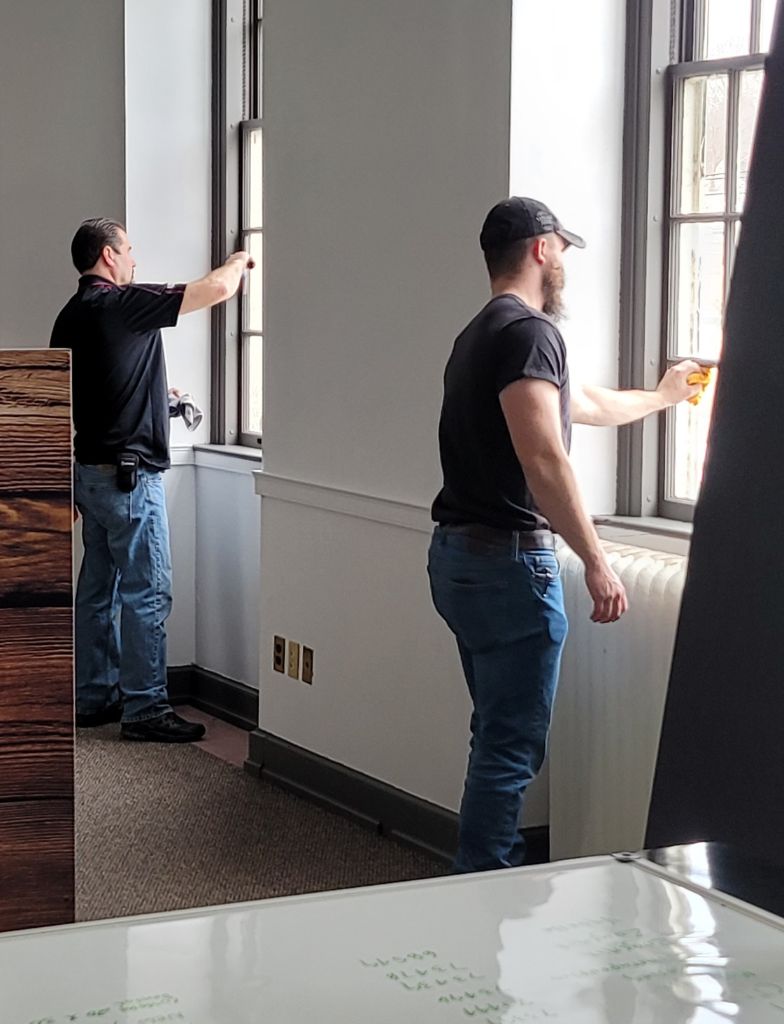
- A stronger first impression. Customers and job candidates read a lobby before anyone speaks to them. Streaked windows and stained carpet tell a story you didn’t mean to write.
- Access to specialized work. Professional crews bring floor buffing, deep upholstery extraction, and hospital-grade disinfection that in-house staff usually aren’t equipped or trained to do.
- Longer asset life. Grit ground into carpet fiber or unsealed grout acts like sandpaper. Industry analysts at ISSA frame cleaning as a preventive-maintenance strategy that protects the capital already sunk into flooring and fixtures.
- Less management overhead. Every hour a facility manager spends scheduling, training, or covering for a sick janitor is an hour not spent on the building’s real problems.
- Compliance and documentation support. Sensitive sites (medical-adjacent offices, food service, schools) often need inspection logs and disinfection records a contracted provider can generate as a matter of course.
- Built-in backup staffing. A single in-house janitor calling out sick leaves nobody covering the floor. A commercial provider rotates coverage without your involvement.
- Quality assurance you can see. Supervisor walkthroughs, inspection scorecards, and documented reporting give you proof of work, not just a clean-looking lobby on a good day.
Pro Tip: Ask any prospective provider for a sample inspection report before you sign anything. If they can’t produce one, they’re probably not running real quality assurance in the field.
Does Professional Cleaning Actually Improve Productivity?
The evidence points that direction, with a caveat worth stating plainly: magnitude varies by building, workforce, and baseline conditions. A review of indoor environmental quality research tied to work performance found a consistent, if uneven, link between better IEQ and both reduced sick leave and improved perceived productivity. One controlled intervention study that raised cleaning quality documented reduced dust loads alongside a 12.5% drop in short-term sickness absence in the offices that received the upgrade.
A reduction in sickness absence sounds modest until you multiply it across a workforce that already loses days to seasonal colds and flu every year.
Building a rough ROI estimate isn’t complicated. You need four inputs:
- Average daily cost per employee (wages plus overhead)
- Estimated sick days avoided annually, even a conservative figure
- Extended asset life on flooring and fixtures from consistent maintenance
- The cost delta between your current cleaning spend and a professional contract
Say a 50-person office loses even two sick days per employee annually to conditions cleaning could partly mitigate. At a modest $200 daily labor cost, that’s $20,000 in lost productivity, well above what most mid-size offices spend on a solid janitorial contract. The math won’t be identical for every building, but the framework holds.
What Types of Commercial Cleaning Services Exist?
Matching the right service to your facility’s actual usage pattern is where most budgets get wasted, either through underscoping or paying for frequency you don’t need.
- Daily janitorial: trash, restrooms, common areas, and high-touch surfaces, typically nightly or per-shift.
- Day porter service: a dedicated on-site presence during business hours for spot cleaning and immediate response, common in retail and high-traffic lobbies.
- Deep or periodic cleaning: quarterly or seasonal work covering baseboards, vents, and areas daily crews skip. Our professional spring cleaning guide covers what a seasonal reset typically includes.
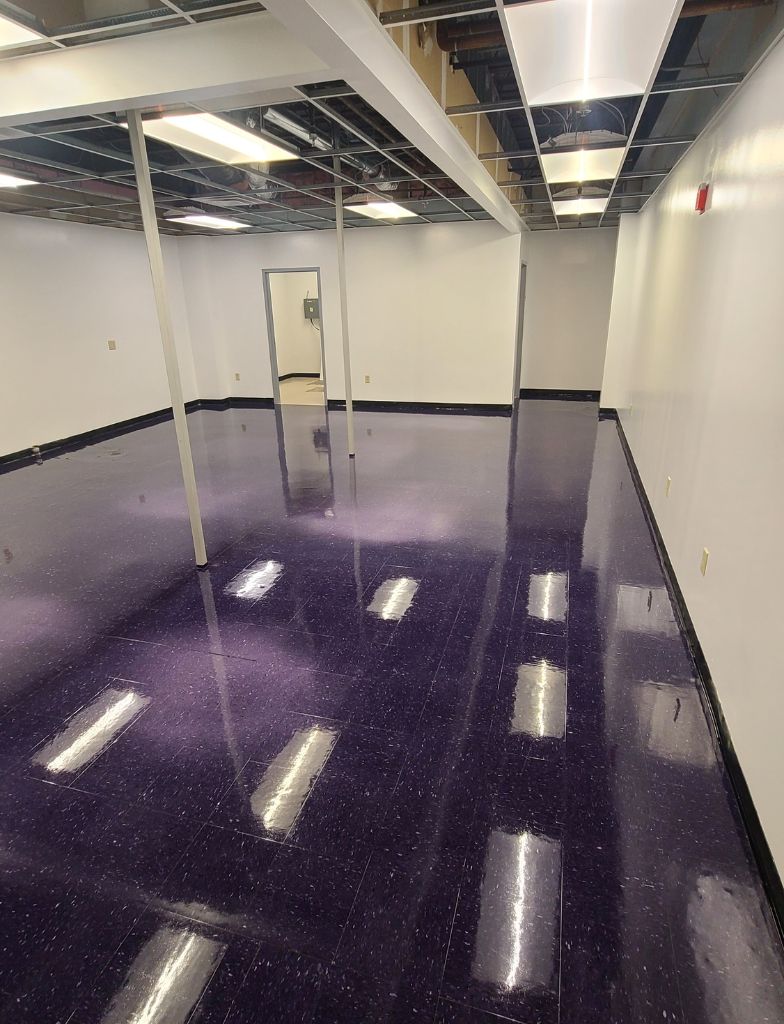
- Floor care: stripping, waxing, buffing, and specialty treatments that extend the life of hard flooring; see commercial floor care fundamentals for what protects a floor versus what just makes it shine temporarily.
- Carpet and rug cleaning: hot-water extraction or encapsulation on a schedule tied to foot traffic, not the calendar.
- Disinfection services: targeted sanitizing for high-touch points or post-illness response, following CDC protocols.
- Pressure washing: exterior walkways, loading docks, and building facades, usually seasonal.
- Post-construction cleanup: dust and debris removal after renovation, before a space reopens to staff or customers.
Healthcare-adjacent offices, industrial sites, and food service facilities carry stricter documentation and chemical-handling requirements that affect both scope and price; industrial cleaning for compliance-driven facilities is a different scope of work than a standard office contract, and pricing should reflect that difference upfront.
How Do You Choose a Commercial Cleaning Provider?
Vetting a bid takes fifteen minutes if you ask the right questions. Skip this step and you’ll find out the hard way, usually six months in, when service quality slides and nobody can tell you why.
- Get an itemized scope. Frequencies, task lists, and a written process for handling scope changes, not a vague “full-service” promise.
- Demand pricing transparency. Labor, supplies, and equipment should be broken out separately; opaque chemical or consumables markups are a common way contracts balloon.
- Ask about quality assurance. Inspection cadence, supervisor site visits, and KPI reporting. Request a sample report before signing.
- Confirm staffing continuity. What’s the backup plan when a regular cleaner is out? High turnover with no continuity plan means inconsistent results.
- Verify insurance and compliance. General liability, workers’ comp, and OSHA documentation if your site requires it.
- Understand remedies and exit terms. What happens if service quality drops, and how do you get out of the contract if it doesn’t improve?
Pro Tip: Request an on-site walkthrough before accepting any bid. Quoting from a floor plan alone is how scope gaps happen, and scope gaps are how a “good deal” turns into a mid-contract price increase.
Why Nu-England Services Fits This Standard
Nu-England Services has operated as a family-owned company since 1968, which means the commercial contracts on the books today sit on top of decades of regional relationships across New England. That kind of tenure isn’t common in a business where vendor turnover runs high.
- Commercial janitorial, floor care, restoration, and specialty cleaning under one provider
- Certifications and client testimonials documented on the company site
- Eco-conscious practices built into standard service, not offered as a costly upsell
- Transparent pricing structure instead of bundled, opaque line items
An Editorial Note on Cleaning as Risk Reduction
I keep coming back to the same framing when I read facility budgets: cleaning isn’t an expense line, it’s insurance against a much bigger repair bill. A neglected floor doesn’t fail gradually. It fails the week you need the space to look presentable for a client visit, and by then refinishing costs more than five years of maintenance would have.
Get a Walkthrough and a Straight Quote
Nu-England Services is the direct route to everything this article just described: daily janitorial, specialized floor care, and restoration work, delivered by one accountable provider instead of three vendors you have to coordinate yourself.
If you manage a facility anywhere in the regions Nu-England Services covers, the next step is simple. Request a walkthrough of your space through the commercial cleaning services page, and get an itemized quote built around your actual scope, not a generic per-square-foot guess.
Recommended
- Professional Spring Cleaning: Transform Homes and Businesses Fast – Nu-England Services
- Janitorial Cleaning in Sutton | Commercial Cleaning Services | Nu-England Services Company
- Complete Guide to the Commercial Cleaning Process
- Why Use Professional Cleaning – Health and Peace of Mind – Nu-England Services
