
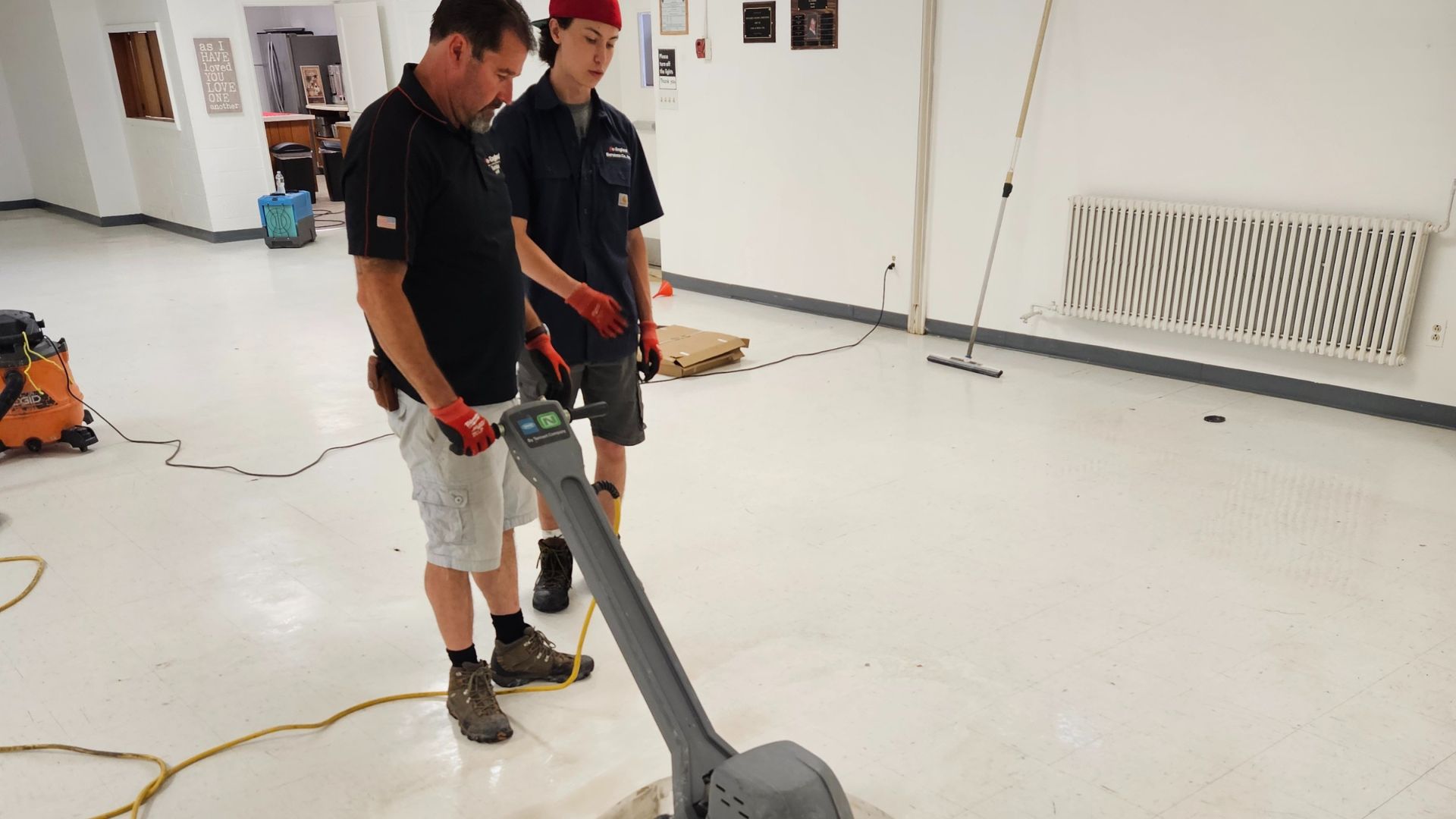
Commercial VCT floors need a professional strip-and-wax cycle on a recurring schedule, while LVP floors need professional deep cleaning with neutral pH products and, when the wear layer fails, plank replacement rather than refinishing. A qualified crew restores VCT gloss and seals out stains using manufacturer-approved products, and the same crew protects LVP’s factory finish instead of waxing over it.
TL;DR:
- For VCT, strip when wax yellows, traffic lanes show through, or stains resist cleaning; rinse thoroughly, then apply two to four finish coats.
- Cleaning restores shine only while LVP’s wear layer remains intact; once it wears through to the printed design, affected planks need replacement.
- Scheduled VCT scrub and recoat visits preserve the existing finish without stripping to bare tile, delaying full strip cycles and reducing lifecycle costs.
Table of Contents
What professional VCT refinishing (strip, scrub, recoat) includes
A proper VCT refinish follows a sequence that manufacturer guidance lays out in specific steps rather than a single pass with a mop:
- The crew applies a chemical stripper matched to the existing finish and lets it dwell long enough to soften the old wax.
- An autoscrubber or rotary machine with a stripping pad agitates the stripper, then the team rinses the floor multiple times to remove residue and prevent haze.
- Once the tile is dry, technicians apply a sealer or undercoat where the substrate calls for it.
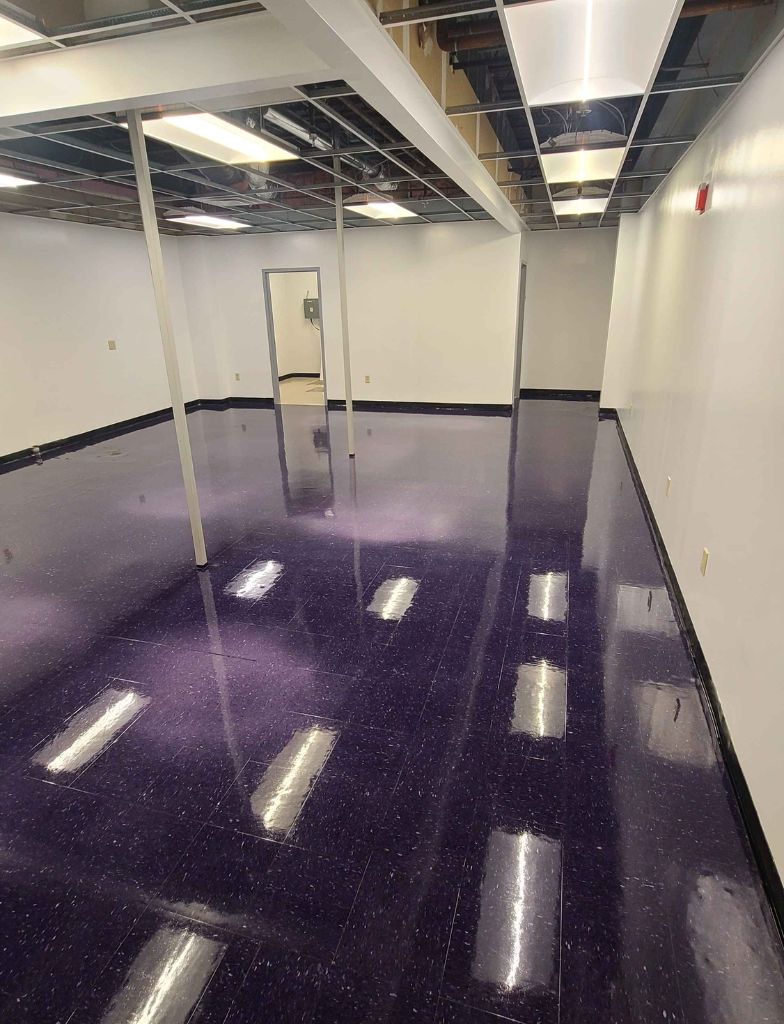
- They build up two to four coats of commercial finish, allowing proper cure time between coats.
A full strip and refinish is warranted when wax buildup has yellowed, when traffic patterns show through the finish, or when stains have penetrated past surface cleaning. Routine scrub-and-recoat maintenance, by contrast, buffs the existing finish and adds a thin maintenance coat without stripping to bare tile. Armstrong Flooring notes that VCT can be restored through these scheduled cycles rather than replaced, which is what makes the category durable for high-traffic commercial spaces. Done correctly, the result is restored gloss, removal of ground-in stains, and a finish that holds up until the next scheduled cycle.
Why LVP is different: professional deep cleaning and when replacement is needed
LVP arrives factory-finished, and that finish is not designed to be stripped or waxed the way VCT is. Karndean’s product maintenance guidance is direct about this: waxing LVP does not restore it and can actually dull the surface or interfere with the wear layer.
Professional deep cleaning for LVP looks different from VCT refinishing:
- Neutral pH cleaners replace the strippers and finishes used on VCT.
- An auto-scrubber with non-abrasive pads lifts embedded soil without scratching the wear layer.
- A low-speed buffer with a soft pad can bring back shine on smooth surfaces, while embossed textures often respond better to scrubbing than buffing.
- Minor scuffs and scratches can sometimes be addressed cosmetically, but once the wear layer is worn through, cleaning alone will not fix the damage.
When the wear layer has failed, plank replacement is typically the only real fix, not a refinishing step. Set expectations accordingly: a professional deep clean on healthy LVP restores shine and removes grime, but it will not reverse gouges or delamination. For a closer look at how wear layers factor into repair decisions, our guide to LVP wear layers breaks down what’s replaceable and what isn’t.
Equipment, pads, and cleaning products pros use
The equipment a crew brings says a lot about whether they understand resilient flooring. Look for:
- An autoscrubber for routine cleaning and rinse cycles on both floor types.
- Buffers in the 175 to 1,750 RPM range, with low-speed buffers reserved for LVP to avoid overheating the wear layer.
- Wet vacuums for rinse recovery during VCT stripping.
- Red pads for general cleaning and buffing, green or blue pads for lighter VCT stripping, and a clear avoidance of black or overly aggressive pads on LVP, as outlined in Karndean’s floor care guide..
On products, neutral pH cleaners are standard for day-to-day resilient floor care, while commercial strippers and finishes from lines like Taski or Johnson Diversey handle the VCT refinish cycle. Ventilation matters during stripping because of fumes, and crews should use PPE and favor low-VOC finishes where available.
Pro Tip: Ask any bidding contractor which pad color they plan to use on your LVP, if they say black without qualification, that’s a sign they’re not distinguishing it from VCT.
Timeline, site logistics, and downtime to plan for
Scheduling a refinish around business hours takes some planning, since each phase has its own time requirement.
- Prep and furniture clearing typically take a few hours for a space in the 1,000 to 2,500 square foot range.
- Stripping and rinsing the VCT often runs several hours depending on how many coats of old finish need to come off.
- Applying two to four coats of finish, with adequate cure time between each.
- Full cure before heavy foot traffic resumes is the final phase, and rushing it risks marring the new finish.
On your end, clearing furniture, protecting adjacent carpet or tile with walk-off mats, and posting signage for staff and visitors all help the crew work efficiently. Temperature and humidity affect cure times too: cooler or more humid conditions slow drying, so a reputable crew will adjust their schedule rather than rush coats.
Cost drivers and ballpark commercial pricing factors
Quotes vary based on several factors that are worth understanding before you compare bids:
- Floor size and current condition, since heavy existing wax buildup means more stripping passes.
- The number of strip cycles and finish coats specified in the scope.
- Mobilization costs, including off-hours scheduling and furniture or equipment removal.
- Access constraints, like elevators-only buildings or multiple floors that slow equipment staging.
Pricing is typically structured per square foot with a project minimum, and bids that come in higher often reflect more coats, more thorough stripping, or more complex site logistics rather than markup. Preventative maintenance, including scheduled scrub-and-recoat visits, delays the need for a full strip cycle and lowers the lifecycle cost of the floor.
How to choose a professional refinishing contractor and questions to ask
Vetting a contractor before signing off on a bid protects both your floor and your warranty.
- Verify insurance, certifications, and ask for references or before-and-after photos from similar commercial jobs.
- Ask whether they offer a preventative maintenance schedule and rapid spot service for isolated problem areas, not just one-time strip jobs.
Pro Tip: A contractor who can’t tell you their dwell time for stripper or their cure time between coats probably hasn’t done this on a commercial scale.
Why hire a local specialist: Nu-England Services evidence and proof points
We’ve been a family-owned business serving New England since 1968, with cleaning, flooring, and restoration work as the core of what we do throughout the region. Our commercial LVP floor refinishing services cover multiple Massachusetts communities, including West Brookfield, Millville, and Marlborough, and we back our work with certifications and customer testimonials that reflect our focus on reliability over shortcuts.
Differences in surface preparation techniques between VCT and LVP prior to refinishing
VCT prep starts with a full assessment of the existing finish layers, since most commercial VCT has years of accumulated wax that needs to come off before any new finish goes down. That means a stripper dwell time, mechanical agitation with a stripping pad, and multiple rinse passes until the rinse water runs clear and the tile feels free of residue. Any wax left behind will trap moisture under the new coats and cause peeling.
LVP prep is a different exercise entirely because there’s no old finish to remove. Instead, prep means a thorough deep clean: pulling ground-in soil out of texture and seams with an auto-scrubber, checking for any adhesive residue or old topical treatments that a previous service may have mistakenly applied, and inspecting the wear layer for damage before deciding whether cleaning alone will suffice. Where a previous owner or cleaning crew wrongly waxed an LVP floor, that wax has to be carefully stripped using a method gentle enough not to damage the factory finish underneath, which is a more delicate operation than standard VCT stripping.
The core distinction is that VCT prep is about removing old material to make room for new coats, while LVP prep is about protecting existing factory material and only intervening where soil or damage requires it. Crews who treat both floors the same during prep tend to either under-clean VCT or over-strip LVP.
Environmental and safety considerations specific to VCT and LVP floor refinishing
Stripping chemicals used on VCT release fumes that require active ventilation during application and cure, and crews should wear gloves and eye protection when handling stripper concentrate. R2X cleaning guidance emphasizes safe stripping and finishing procedures alongside preventative daily care, which reduces how often a facility needs the more chemical-intensive full strip.
LVP work carries fewer chemical hazards since the process avoids stripper and heavy finish altogether, but ventilation still helps during deep cleaning to manage cleaner fumes and speed drying. PPE requirements are lighter for LVP maintenance, though slip hazards from wet floors during either process call for the same signage and barrier practices.
Common repair methods for VCT and LVP floors before refinishing
Before any refinishing work begins, damaged areas need repair, and the methods differ by material. On VCT, chipped or cracked tiles are typically replaced individually since the material comes in discrete units. Seams or gaps between tiles can be filled with a matching seam filler, and loose tiles get re-adhered before stripping starts, since a loose tile under a stripping machine can shift and cause uneven wear.
LVP repair is plank-based rather than tile-based. A scratched or gouged plank is usually swapped out rather than patched, since the wear layer doesn’t take fillers the way VCT’s harder surface does. Seams in LVP are generally tighter by design, so repair there focuses more on replacing a damaged plank cleanly than on filling gaps. Minor surface scuffs on LVP can sometimes be buffed out during the deep clean itself, but anything that’s broken through to the core material needs replacement, not cosmetic treatment.
In both cases, addressing damage before refinishing or deep cleaning prevents the problem from being sealed in or made worse by machine agitation. A contractor who skips this step and strips or scrubs over existing damage is setting up a shorter interval before the next service call.
Signs of when to refinish versus replace VCT and LVP flooring
VCT gives clear signals when it’s time to refinish rather than replace: yellowed or dull finish, visible traffic lanes, and surface staining that doesn’t respond to routine cleaning all point to a strip-and-recoat cycle. Replacement becomes the better call when individual tiles are cracked across a large portion of the floor, when the substrate beneath shows damage, or when the tile pattern itself is outdated and a full redesign is planned anyway.
LVP tells a different story because its condition depends almost entirely on the wear layer. If the floor still looks dull or scuffed but the wear layer is intact, a professional deep clean restores most of the original appearance. Once the wear layer has worn through to the printed design layer, exposing it to moisture and abrasion, refinishing is not an option and replacement of the affected planks becomes necessary. Widespread wear-layer failure across a large area, rather than isolated planks, usually signals that a full floor replacement makes more sense than a patchwork of plank swaps.
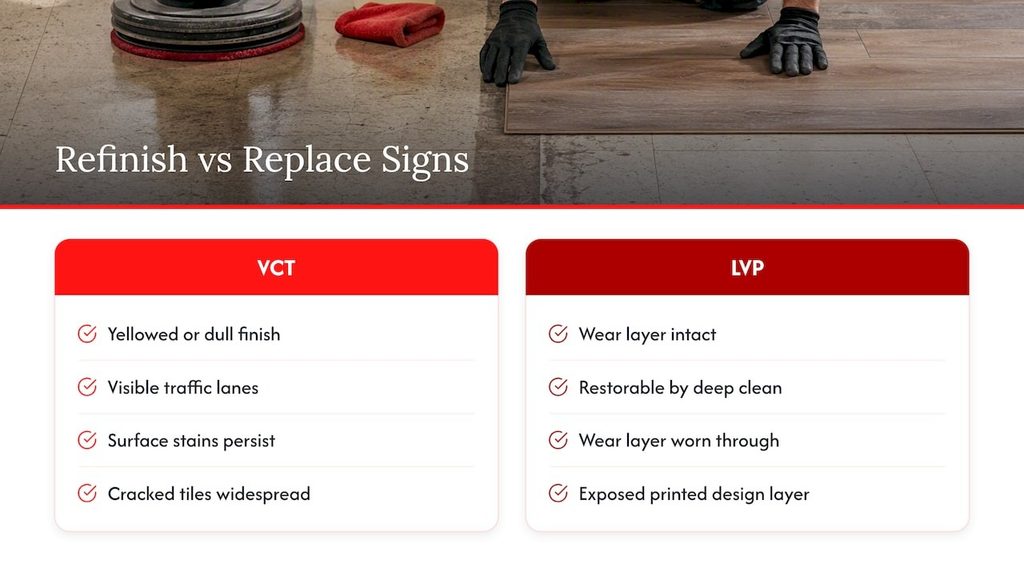
In both cases, the decision point is less about the floor’s age and more about whether the surface material itself is still structurally sound. A floor that’s twenty years old but well-maintained can often be restored, while a much younger floor with poor maintenance history may already need replacement.
Post-refinishing care and curing best practices tailored to VCT and LVP
VCT needs a full cure period before it goes back into heavy service, and walking on a freshly coated floor too soon can leave permanent marks in the finish. Once cured, daily dust mopping and a scheduled buffing program keep the new finish looking good longer, and entrance matting reduces the grit that would otherwise scratch the surface. Armstrong Flooring points out that extended entrance matting and frequent dust mopping can push the interval between full strip cycles out considerably in high-traffic buildings.
LVP care after a professional deep clean is simpler since there’s no finish curing to manage. The priority is maintaining the clean with neutral pH products and avoiding anything acidic or wax-based that could dull or damage the factory finish. Regular dust mopping and prompt spill cleanup prevent grit and moisture from working into seams. Our guide on key features of commercial floor care covers the daily habits that keep either floor type looking refinished for longer between professional visits.
Comparison of refinishing lifespan and durability for VCT vs LVP floors
VCT’s advantage is longevity through renewal: with a consistent maintenance program of scheduled stripping, recoating, and polishing, VCT commonly delivers 20 or more years of service life, and the material stays repairable rather than needing full replacement for most of that span. Each refinish cycle essentially resets the surface, which is why VCT remains common in large commercial footprints where lifecycle cost matters more than upfront material cost.
LVP’s durability runs on a different clock, one tied to the wear layer rather than a finish that can be repeatedly reapplied. Professional deep cleaning extends the life of that factory finish by preventing premature wear, but once the layer is gone, there’s no recoating step to bring it back, only plank replacement. That makes LVP’s effective lifespan more dependent on upfront product quality and daily foot traffic than on any maintenance cycle a contractor can perform later. For facilities planning a long multi-decade horizon, this is often the deciding factor between the two materials.
Field perspective: balancing lifecycle cost and sustainability for commercial floors
VCT’s ability to be restored again and again is undervalued. Facility managers chasing the lowest upfront cost sometimes skip matting and dust mopping programs that would have stretched a strip cycle by years, not weeks. The smarter spec decision is matching the flooring to your actual maintenance capacity, not just your budget.
Nu-England Services: how we help commercial clients with VCT and LVP care
We handle commercial floor refinishing and LVP deep cleaning across New England, applying the strip, rinse, and recoat process for VCT and the gentler maintenance LVP requires, backed by certifications and testimonials from clients we’ve served for decades. A quote from us spells out the products, pad types, and coat counts we’ll use, so you know exactly what you’re paying for before work starts. Request a free estimate for commercial floor refinishing and we’ll walk your space before we quote it.
FAQ
How much does it cost to refinish 1,000 square feet of hardwood floors?
Hardwood refinishing pricing depends on wood condition, number of coats, and site access, and it’s a separate process from VCT or LVP work since it involves sanding rather than stripping. For an accurate figure on your space, request a quote that reflects your floor’s current condition rather than relying on a generic average.
Can LVP be professionally cleaned?
Yes, LVP can be professionally deep cleaned using neutral pH cleaners and non-abrasive pads designed to protect the factory finish. Karndean’s maintenance guidance confirms this approach restores shine without the waxing or stripping used on VCT.
Can you refinish LVP flooring?
LVP isn’t refinished the way VCT is, since it arrives with a factory finish that isn’t designed for stripping or recoating. Professional deep cleaning maintains that finish, and when the wear layer is damaged beyond cleaning, plank replacement is the standard fix rather than a refinish.
What should you not use on a luxury vinyl floor?
Avoid wax, acidic cleaners, and abrasive pads on LVP, since these can dull or damage the factory wear layer. Karndean’s guidance recommends sticking to neutral pH products and non-abrasive pads for routine and deep cleaning alike.
