
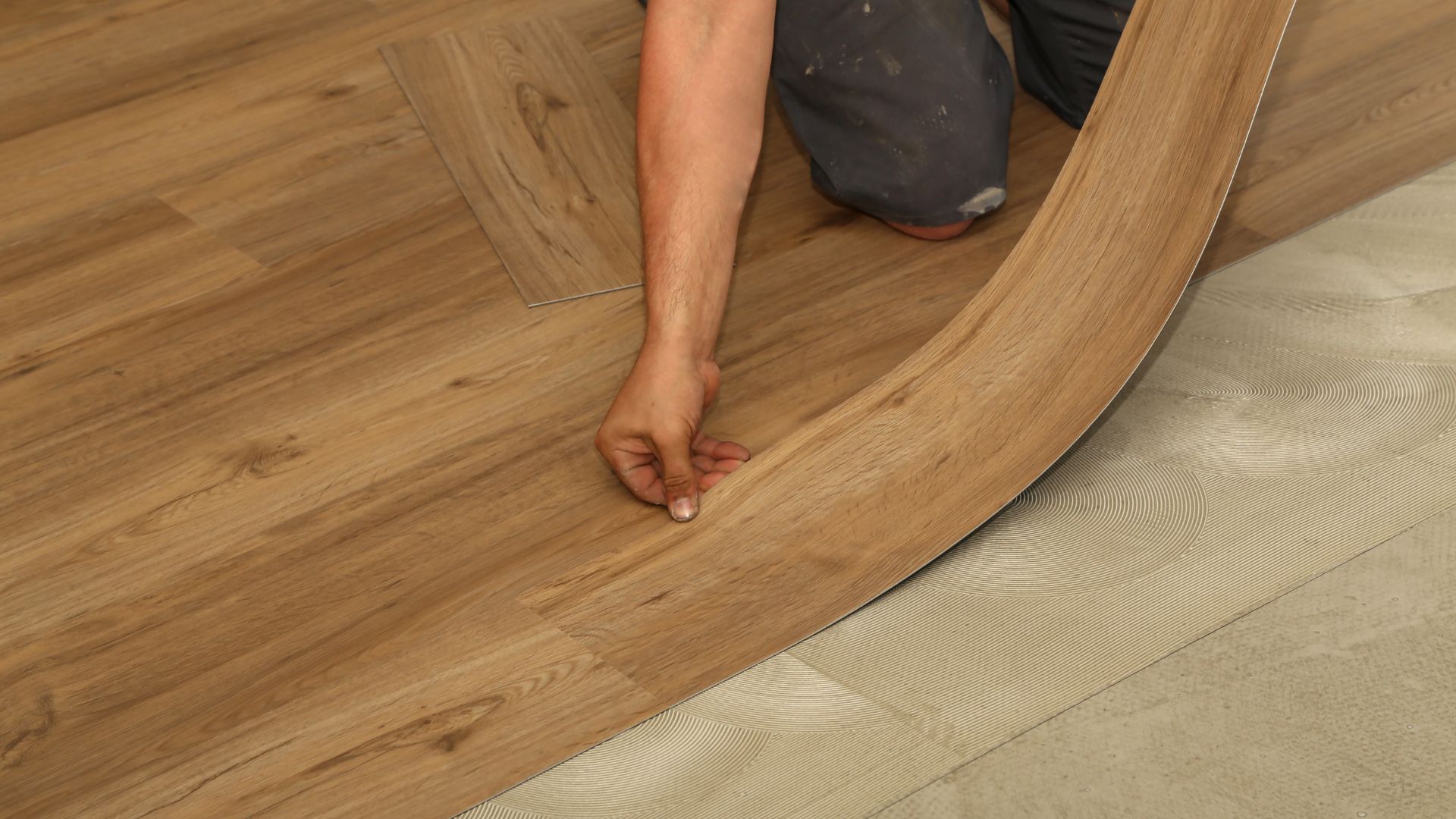
The best time to buy flooring for a luxury vinyl plank (LVP) project is often winter. Your heat is already running, the house is closed up, and indoor temperatures sit in the range that LVP manufacturers require before, during and after installation. If you have been thinking about replacing worn carpet or tired vinyl, the cold months are a practical window to get it done.
In this guide, we explain why winter works for LVP in Central Massachusetts homes, whether LVP needs to acclimate (and for how long in cold weather), what can go wrong in a New England winter, and how to plan the job so your new floor goes down right the first time.
TL;DR: Yes, winter is a good time to install LVP, as long as the rooms are heated to the manufacturer’s range, usually 65°F to 85°F, before, during and after the install. Plan on about 48 hours of acclimation in the room where the planks will go, and longer if the boxes sat in a cold truck, garage or porch.
- Running heat gives you the steady indoor temperatures LVP needs, and Shaw’s guidelines call for working HVAC for 7 days before, during and after installation.
- Cold boxes need time: unpack or open them in the heated room and let them reach room temperature before anyone cuts a plank.
- Watch the problem spots: unheated porches, three-season rooms, garages and radiant-heat floors each have their own rules.
Table of Contents
Is Winter the Best Time to Buy Flooring?
For LVP, winter has real advantages that have nothing to do with sales or marketing. The biggest one is temperature control. The LVP installation guides we work from ask for a steady indoor temperature, and in a Massachusetts winter your heating system is already holding the house at a consistent level day and night.
Compare that with the shoulder seasons. In April or October, many homes swing between open windows on a warm afternoon and a chilly night with the heat off. Those swings are exactly what installation guides warn against, because vinyl expands and contracts with temperature.
Winter also lines up with how people live. You are inside more, you notice the worn spots and the cold, hard floors, and you have time to choose a product before the spring projects and the late-summer moving rush start competing for your calendar.
What makes winter a good time for LVP?
- Stable heat. A heated house holds the 65°F to 85°F range most LVP guides require, without the swings of spring and fall.
- Closed windows. No afternoon sun pouring through open sliders and no humid summer air moving through the rooms.
- Before the holidays or after. A finished floor before guests arrive, or a fresh start in January when the decorations come down.
- Time to plan. Winter gives you room to visit a showroom, take samples home and look at them in your own lighting.
What are the downsides of a winter install?
Winter is not perfect, and we would rather you know the trade-offs up front. Product delivered in a cold truck needs extra time to warm up. Salt, sand and slush get tracked in during the job, so entries need protection. And very dry heated air can affect other parts of the house, like wood trim and doors, even though LVP itself is not sensitive to humidity the way solid hardwood is.
None of these are deal-breakers. They just mean a winter job needs a little more planning around delivery, acclimation and entryways.
| Season | Indoor conditions for LVP | What to watch |
|---|---|---|
| Winter | Heat running, steady temperatures, windows closed | Cold deliveries, salt and slush at entries, unheated rooms |
| Spring | Heat cycling off and on, windows opening | Temperature swings, mud season tracking |
| Summer | Air conditioning or open windows, humid air | Heat buildup in sunrooms, direct sun through glass |
| Fall | Heat not yet running steadily | Warm days and cold nights, busy schedules |
Does LVP Need to Acclimate?
Yes, in most cases. Acclimation means letting the planks reach the temperature of the room where they will be installed before anyone cuts or clicks them together. A plank that is cold when it goes down will grow slightly as it warms up, and that can lead to tight joints, peaking or gaps later.
Manufacturers word this differently, so always follow the instructions for the exact product you buy. Here is what two of the brands we carry say in their installation guides:
| Requirement | Karndean Rigid Core | Shaw Loose Lay Vinyl Plank |
|---|---|---|
| Acclimation time | At least 48 hours out of the packaging for commercial jobs; for homes, required if the product was exposed to extreme temperatures | 48 hours for flooring and adhesive |
| Room temperature | 65°F to 85°F | 65°F to 85°F before, during and after installation |
| HVAC | Keep the room in range for best performance | Operating for 7 days before, during and after installation |
| After installation | Maintain 65°F to 85°F | Hold range for 48 hours, then keep at least 65°F |
| Radiant heat | Floor surface no more than 85°F | Never exceed 85°F; lower to 65°F three days before install |
You can read the full details in the Karndean rigid core installation guidelines and the Shaw loose lay vinyl plank installation guidelines. Notice the common thread: a heated, steady room is part of the spec, not a nice-to-have.
How long does LVP need to acclimate in cold weather?
Plan on at least 48 hours in the heated room, with the boxes spread out so air can move around them. If the flooring rode in an unheated truck or sat in a garage overnight in January, give it more time. The goal is simple: the planks should feel like they are at room temperature, not cold to the touch, before installation starts.
Pro Tip: Don’t stack all the boxes in one tight pile against an outside wall or next to a heating vent. Spread them in short stacks in the middle of the room so they warm evenly.
How to Plan a Winter LVP Installation
A good winter install is mostly about sequence. Here is the order we recommend for homeowners in Central Massachusetts.
- Choose and measure early. Pick your product, then have the rooms measured so the order includes waste for cuts and closets.
- Keep the heat on. Set the thermostat in the install rooms to a steady temperature in the manufacturer’s range, and leave it there. Don’t turn it down at night or while you are away during the job.
- Schedule delivery ahead of installation. Have the flooring delivered so it can acclimate for the full time the manufacturer requires.
- Clear the rooms. Move furniture, rugs and anything stored on the floor. Old carpet and pad come up first.
- Protect the entries. Lay runners and mats at the doors installers will use, so salt and sand stay outside.
- Check the subfloor. The installer should check flatness and moisture before any plank goes down.
- Hold temperature after the install. Keep the heat steady for at least the 48 hours after installation that guides like Shaw’s call for.
If you want a deeper look at choosing a product before you buy, our guide to what LVP wear layers mean for you explains how wear layer thickness affects how a floor holds up in busy rooms.
What about unheated rooms and porches?
Three-season rooms, enclosed porches and garages are common in New England houses, and they are where winter installs need the most care. Karndean’s guidelines call for a larger perimeter expansion gap, a minimum of 3/8 inch, in sunrooms, three-season rooms, unheated rooms and areas with direct sun through glass.
If a room is not heated in winter, ask your installer whether the product you picked is rated for it at all. Some products allow it with extra steps and some do not, and the answer lives in the installation guide.
Can you install LVP over radiant floor heat?
Often, yes, but it comes with specific steps. Shaw’s guidelines ask that the radiant system run for at least two weeks before installation, be lowered to 65°F three days before, and then come back up in 5°F steps afterward, never exceeding 85°F. Karndean also caps the floor surface temperature at 85°F. Winter is when radiant systems are on, so this is worth settling before the job starts.
How Does Winter Air Affect New Floors?
Heated winter air is dry, and that is one more reason LVP is a good winter choice. LVP is a synthetic product and is far less affected by seasonal humidity than solid hardwood. What the installation guides focus on is temperature, which is why steady heat matters more than humidity for LVP.
Humidity still matters for the rest of the house. The EPA’s page on controlling moisture in your home includes an ASHRAE chart of recommended maximum indoor humidity by outdoor temperature: about 35% when it is 20°F outside, 30% at 10°F and 25% at 0°F. Running a humidifier above those levels in a cold snap can cause condensation on windows and cold walls.
The simple rule: keep LVP rooms at a steady temperature and keep winter humidity moderate, not high.
What about winter salt and slush?
New LVP handles water far better than carpet, but road salt and sand are abrasive. Grit dragged across a new floor dulls the wear layer over time. Put a mat outside and inside every door, sweep or vacuum entries often, and wipe up slush before it dries into a white film. Our guide to protecting floors from winter salt stains covers the cleanup steps for carpet, rugs and hard floors.
Pro Tip: Put felt pads on chair and table legs before the furniture goes back on a new LVP floor. It’s the cheapest scratch protection you can buy.
DIY or Professional LVP Installation?
Click-lock LVP is marketed as DIY-friendly, and a careful homeowner can do a small, square room. Most problems we see come from what happens before the first plank: an uneven subfloor, cold product, no expansion gap, or a room that cools off overnight.
It’s time to call a professional when:
- You are covering several connected rooms, hallways or an open floor plan.
- The subfloor has dips, humps, old tile or glued-down vinyl to remove.
- The project includes stairs, radiant heat, a basement slab or an unheated room.
- You need old carpet, pad and tack strip removed and hauled away.
- You want the floor done on a set schedule, such as before the holidays.
Our vinyl flooring installation team handles the full job, from removing old flooring to the final transition strips. If you are replacing carpet in some rooms and keeping it in others, our post on replacing carpet in New England homes walks through the steps for that side of the project.
Field Perspective: Why We Like Winter Floor Projects
After decades of putting down floors in Central Massachusetts, our view is that the season matters less than the conditions, and winter gives you the most control over the conditions. A heated house, a closed-up building and an owner who is home and paying attention are a good combination for a flooring job.
The jobs that go wrong are almost never about the product. They are about rushing: cold boxes opened and installed the same morning, heat turned down to save oil while the family is away, or a porch treated like a heated room. Give the floor the conditions it asks for, and LVP is one of the most forgiving floors you can own.
We also think winter is the right time to make the decision, even if you install later. Our guide to luxury vinyl flooring is a good starting point before you visit a showroom.
Pro Tip: Take samples home and look at them on the floor in daylight and at night under your own lights. A plank that looks warm in a showroom can look very different in a north-facing room.
How Nu-England Services Helps With Flooring
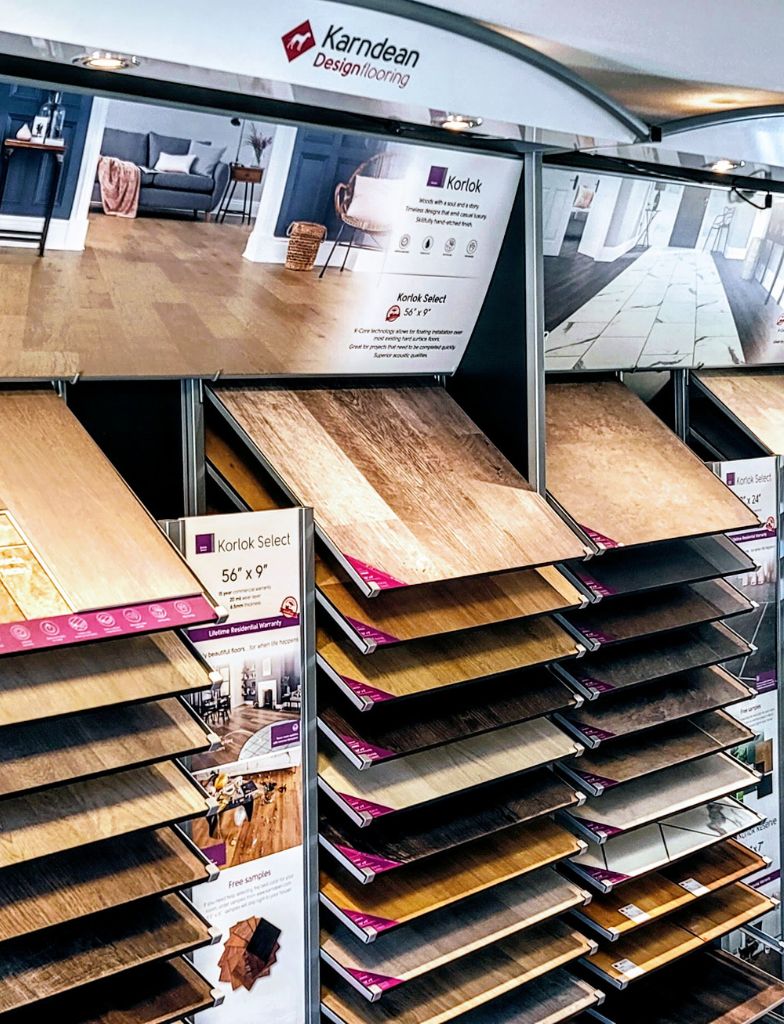
Nu-England Services has been family-owned since 1968, and our office and flooring showroom sit at 190 Worcester-Providence Turnpike (Route 146) in Sutton. You can see and handle product from brands such as Karndean, Shaw, COREtec, Tarkett, Patcraft and Philadelphia Commercial, then take samples home.
Our flooring sales and installation service covers measuring, product selection, removal of old flooring and professional installation for homes and businesses. We are licensed, bonded and insured, and our technicians are background-checked. Every job ends with a final walk-through.
We serve Sutton, Worcester, Shrewsbury, Grafton, Millbury, Marlborough, Leominster, Fitchburg and towns across Worcester County. For businesses that are keeping existing VCT in some areas, we also offer commercial floor refinishing in Worcester and nearby towns. Ready to compare products for a winter project? Start with our residential vinyl flooring installation page.
FAQ
What is the best time to buy flooring?
For luxury vinyl plank, winter is often the best time to buy flooring because your heat keeps the house at the steady 65°F to 85°F range manufacturers require. You also have time to choose a product before spring projects pick up. The right time for any floor is when you can hold the conditions the installation guide calls for.
Does LVP need to acclimate before installation?
Yes, in most cases. Shaw calls for 48 hours of acclimation, and Karndean requires acclimation when the product has been exposed to extreme temperatures. Always follow the guide for your specific product.
How long should LVP acclimate in winter?
Plan on at least 48 hours in the heated room where it will be installed. If the boxes were stored in a cold garage or delivered in an unheated truck, give them more time until the planks are at room temperature.
Can LVP be installed in a cold house?
Not if the rooms are below the manufacturer’s range. Both Karndean and Shaw list 65°F to 85°F, and Shaw asks for that range before, during and after installation. Turn the heat on and keep it steady before the job starts.
Is LVP a good choice for New England winters?
Yes. LVP handles slush and spills better than carpet and is far less affected by seasonal humidity than solid wood. Protect it from salt and grit with entry mats and regular sweeping, and it will hold up well through Massachusetts winters.
Thinking about new floors this winter? Request a quote or call Nu-England Services at (508) 865-9810 to visit our Sutton showroom and plan your LVP installation.
